This is a selected chapter from book Component-based finite element design of steel connections by prof. Wald et al. The chapter is focused on verification of end plate.
Description
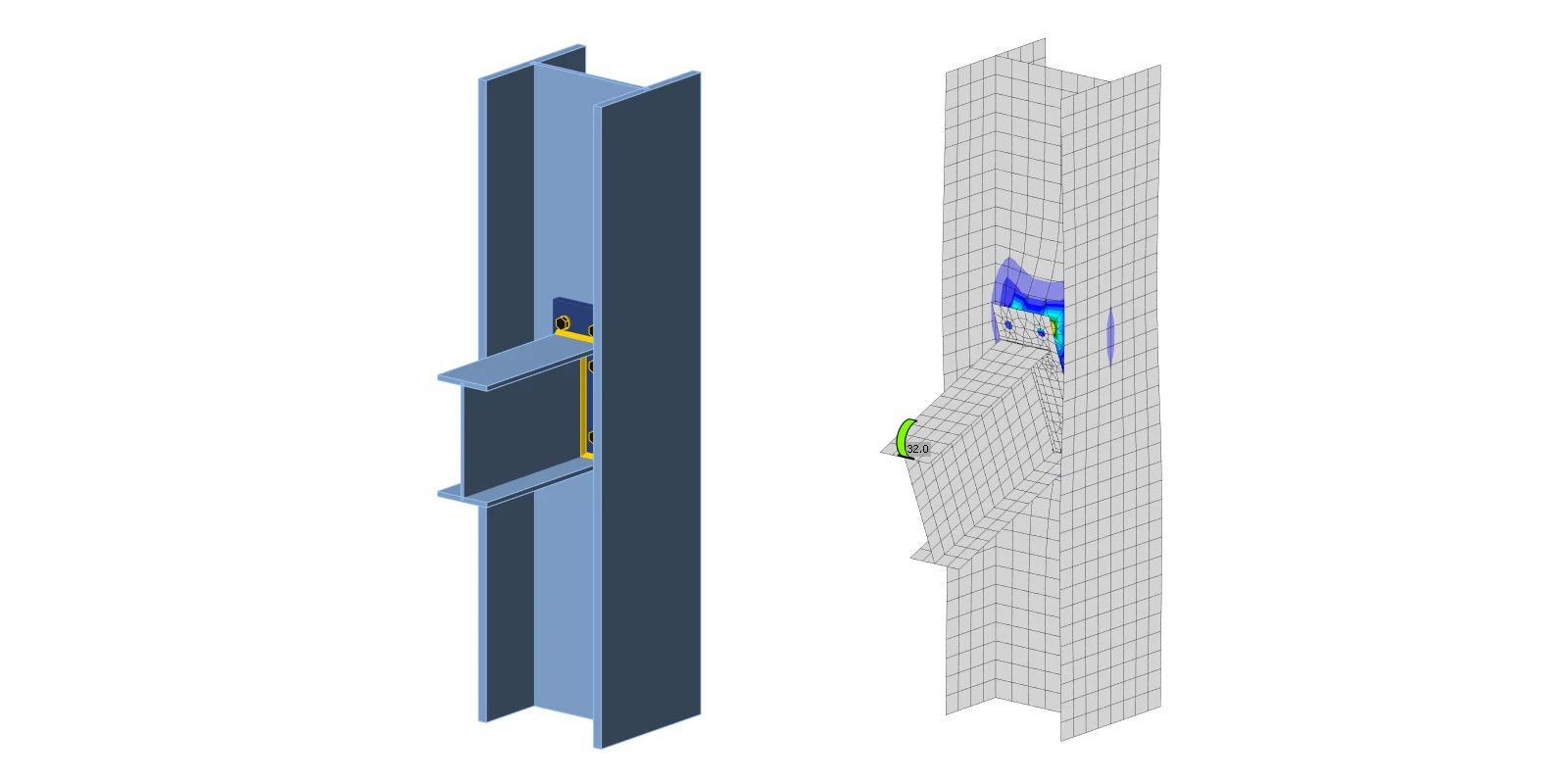
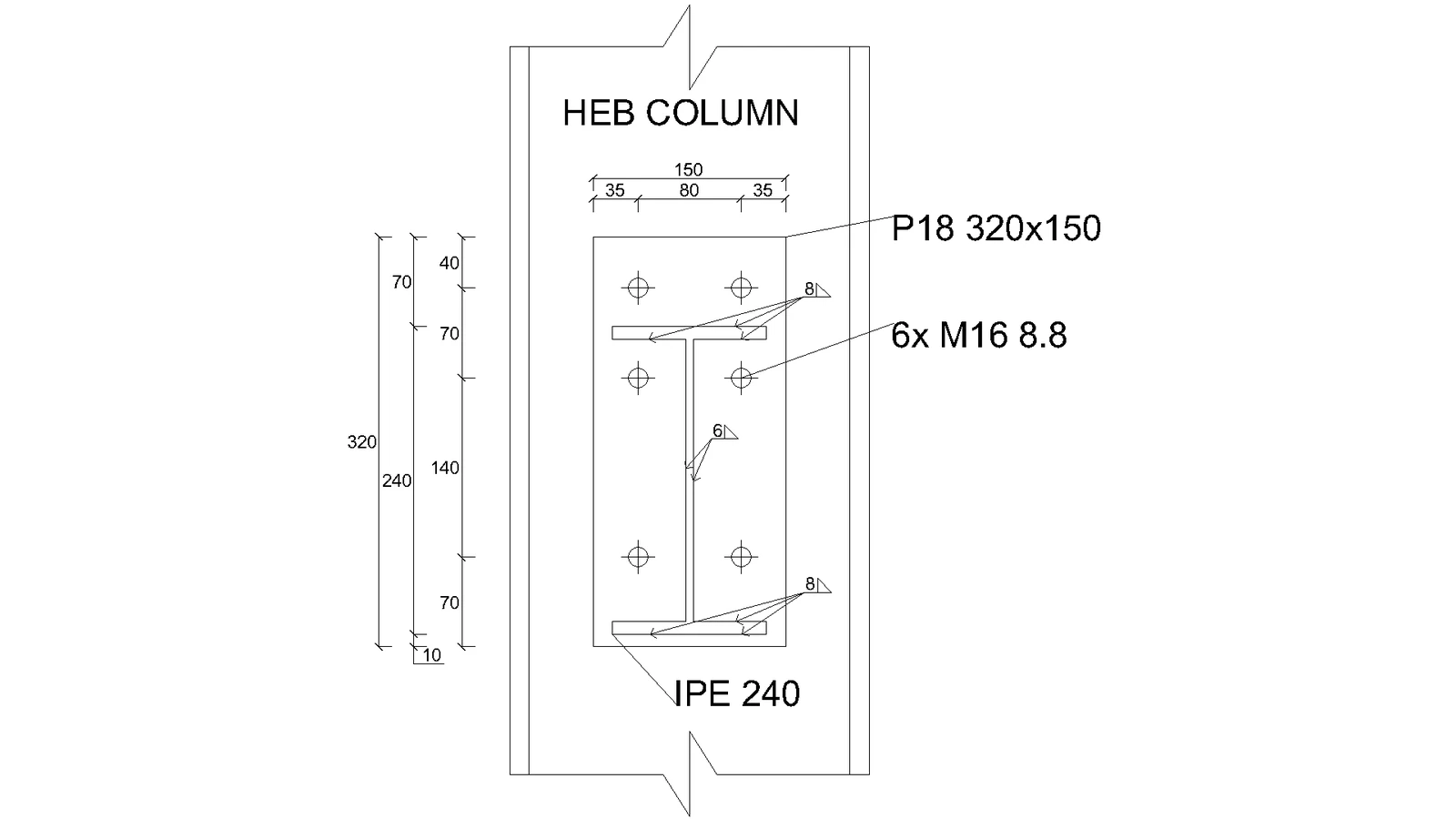
Component-based finite element method (CBFEM) model of the beam to column joint is verified on Component method (CM). The extended end plate with three bolt rows is connected to column web and loaded by bending moment; see Fig. 5.3.1.
Fig. 5.3.1 Joint geometry - all dimensions in mm
Analytical model
Three components, which are guiding the behavior, are the end plate in bending, the beam flange in tension and in compression, and the column web in bending. The end plate and the beam flange in tension and in compression are designed according to EN 1993-1-8:2005. The behavior of the column web in bending is predicted according to (Steenhuis et al. 1998). The results of experiments of the beam to column minor axis joints, e.g. (Lima et al. 2009), show good prediction of this type of joint loaded in-plane of a connected beam.
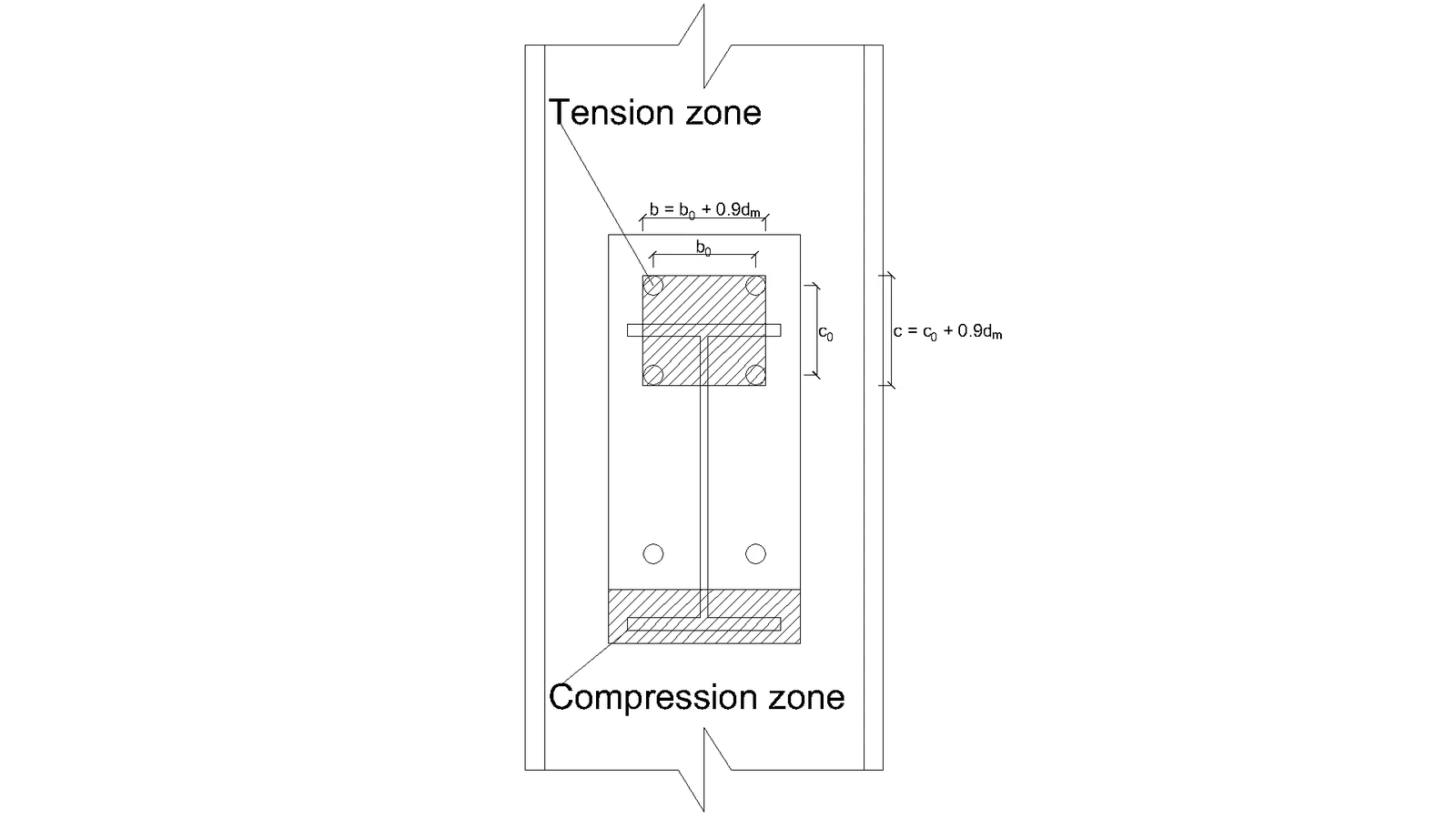
Fig. 5.3.2 Definition of the tension zone
Flocal.Rd=min(Fpunch.Rd;Fcomb.Rd)
Fpunch.Rd=n⋅π⋅dm⋅twc⋅fy/(3⋅γM0)bolted end plate
b=b0+0.9⋅dm
c=c0+0.9⋅dm
a=L−b
k=1 if (b+c)/L>0.5
k=0.7+0.6(b+c)/L if (b+c)/L≤0.5
bm=L1−0.82c2twc21+1+2.8twcLc22, but bm≥0
Fcomb.Rd is the resistance to combined punching, shear and bending
Numerical model
Assessment is based on the maximum strain given according to EN 1993-1-5:2006 by the value of 5 %. Detailed information about CBFEM model is summarized in Chapter 3.
Verification of resistance
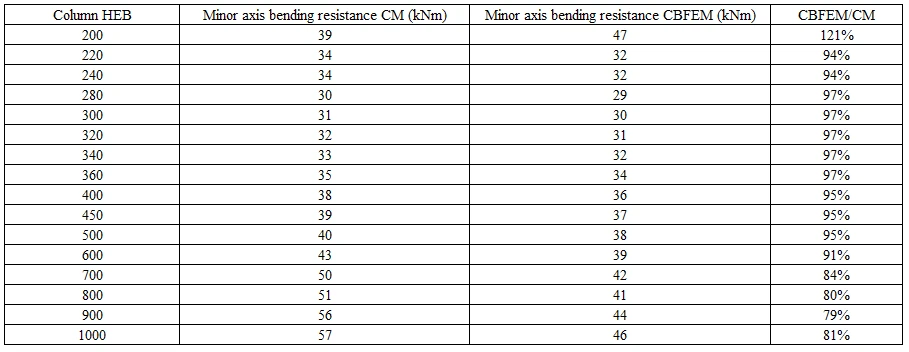
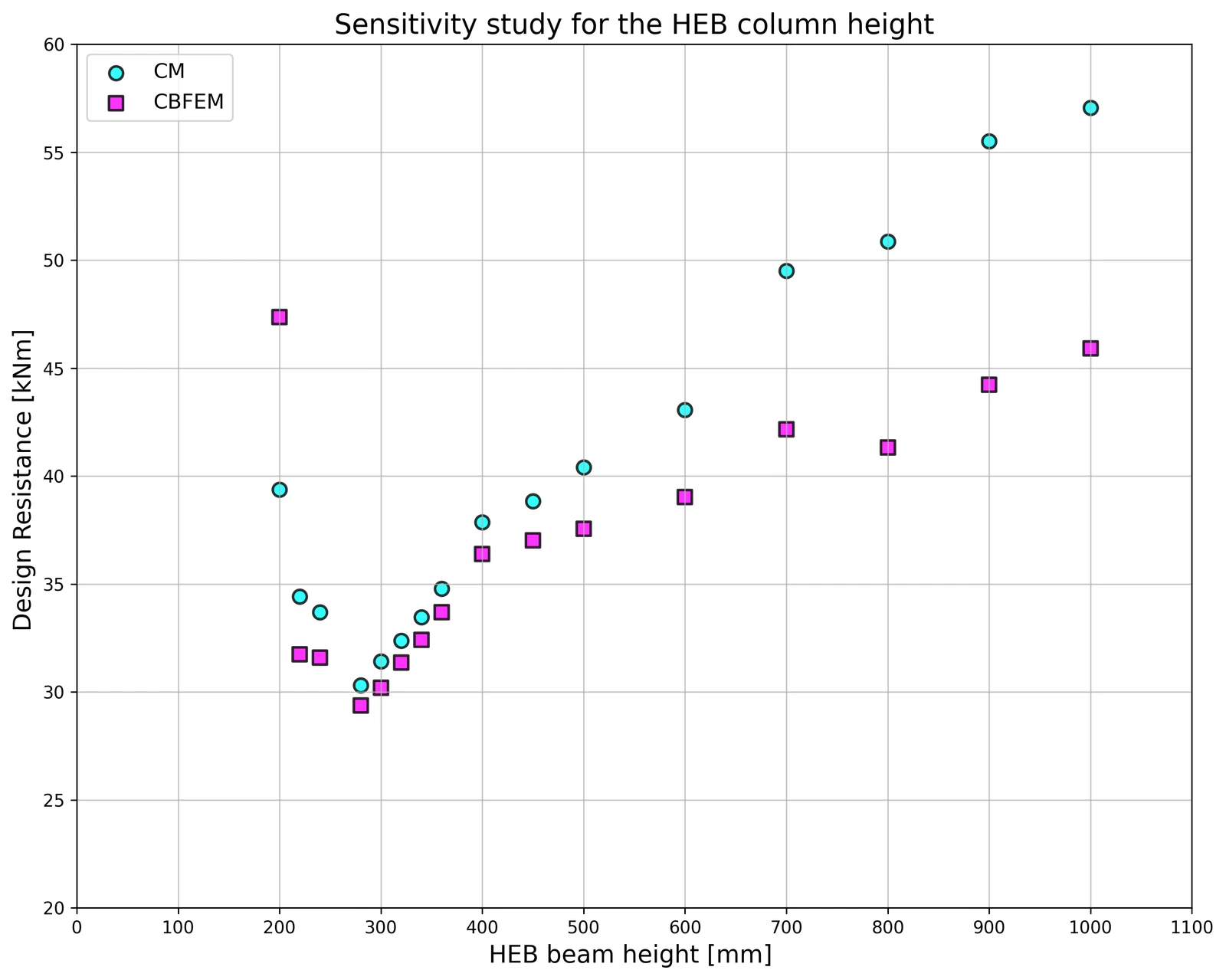
The sensitivity study of the joint resistance was prepared for column cross-sections. Joint geometry is shown in Fig. 5.3.1. In Tab. 5.3.1 and in Fig. 5.3.3, the results of calculations in case of enlarging end plate P18 relatively with the column section are summarized.
Tab. 5.3.1 Results of prediction of the of end plate minor axis connection for different rafters
Fig. 5.3.3 Comparison resistance of end plate minor axis connection predicted by CBFEM and CM
Global behavior
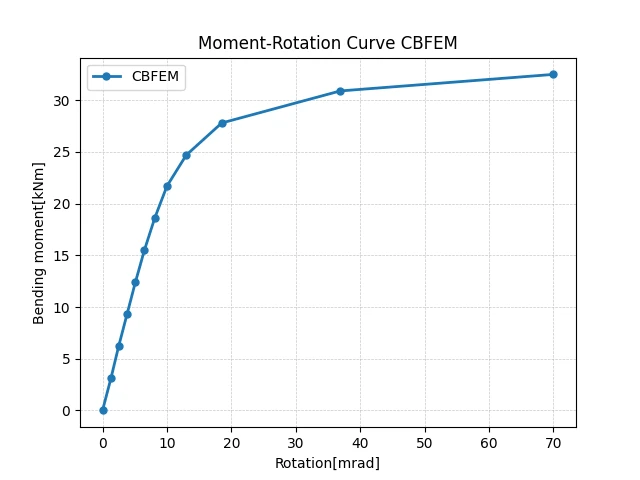
Global behavior is presented on force-deformation curve. Beam IPE 240 is connected to column HEB 300 with six bolts M16 8.8. End plate geometry is shown in Fig. 5.3.1 and in Tab. 5.3.1. Comparison of both methods results is presented in Fig. 5.3.4 and in Tab.5.3.2. Both methods predict similar design resistance. CBFEM generally gives lower initial stiffness compared to CM.
Fig. 5.3.4 Prediction of behavior of end plate minor axis connection on moment rotational curve CBFEM
Tab. 5.3.2 Main characteristics for global behavior
CM
CBFEM
CM/CBFEM
Initial stiffness
[kNm/rad]
16130
2232
7.23
Design resistance
[kNm]
31
30
1,03
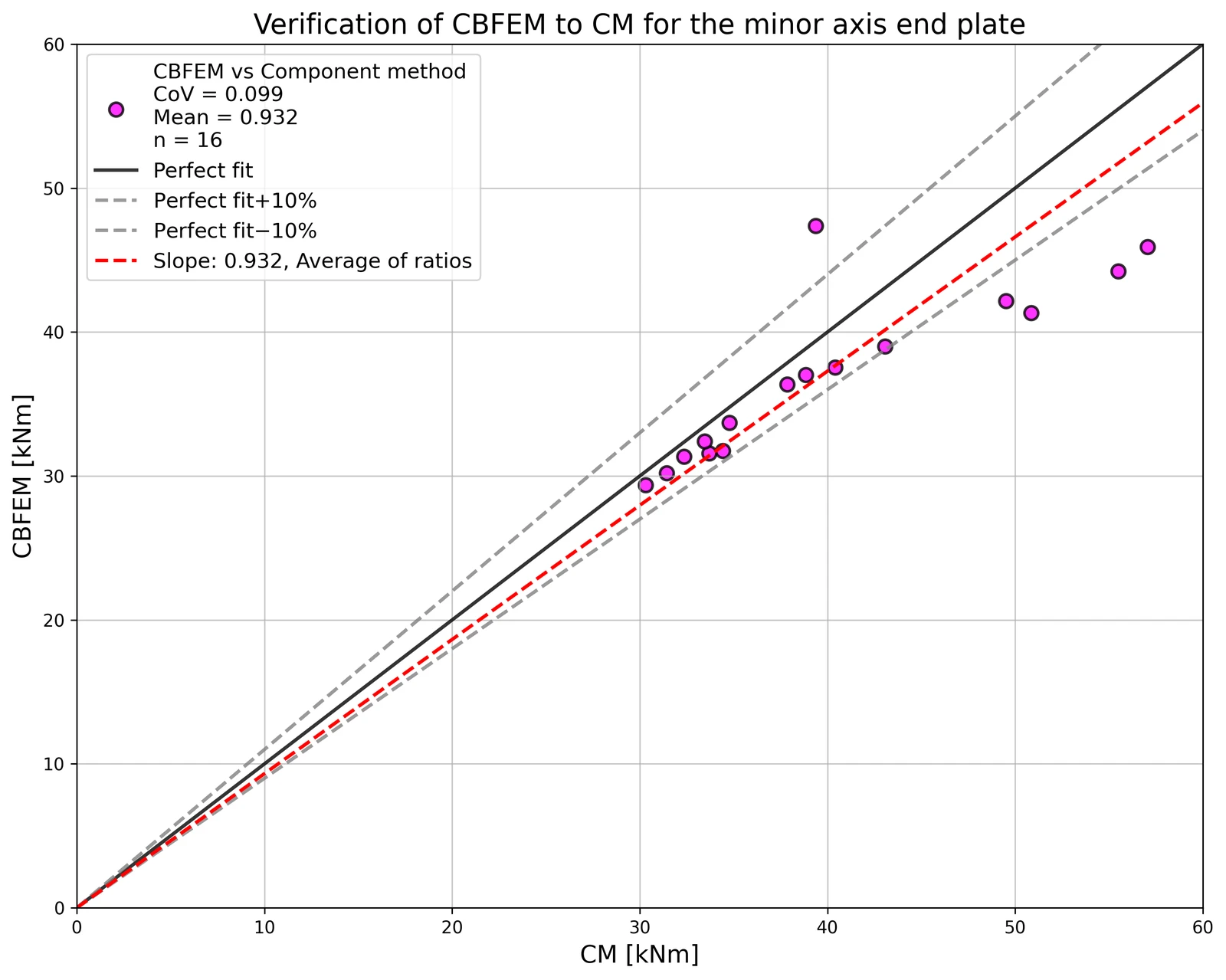
The results of studies are summarized in the graph comparing resistances by CBFEM and component method; see Fig. 5.3.5. The results show that the difference between methods is up to 14 %. CBFEM predicts in all cases lower resistance compared to CM, which is based on simplification in (Steenhuis et al. 1998). Similar results may be observed in work by (Wang and Wang, 2012).
Fig. 5.3.5 Summary of verification of CBFEM to CM for the end plate minor axis connection
Benchmark example
The benchmark case is prepared for the end plate minor axis connection according to Fig. 5.3.1 with modified geometry as summarized below.
EN 1993-1-5, Eurocode 3, Design of steel structures – Part 1-5: Plated Structural Elements, CEN, Brussels, 2005.
Steenhuis M., Jaspart J. P., Gomes F., Leino T. Application of the component method to steel joints, in Control of the Semi-rigid Behaviour of Civil Engineering Structural Connections Conference, COST C1, Liege, Belgium, 1998, 125-143.
Wang Z., Wang T. Experiment and finite element analysis for the end plate minor axis connection of semi-rigid steel frames, Tumu Gongcheng Xuebao/China Civil Engineering Journal, 45 (8), 2012, 83-89.