Idea Statica
  • Steel
  • Concrete
  • BIM & workflows
  • Support & Learning
  • Pricing
  • Company
  • Steel overview
  • Connection design
  • Member design
  • Parametric design
  • Steel case studies
  • Concrete overview
  • Walls and D-regions
  • Anchoring design
  • Members & cross-sections
  • Concrete case studies
  • BIM overview
  • Supported integrations
  • Checkbot
  • Viewer
  • APIs
  • Support Center
  • E-learning & certification
  • Blog
  • Downloads & Licensing
  • Plans
  • Free community tool
  • Enterprise customers
  • Students & educators
  • How much will you save?
  • About us
  • Contact
  • Research & development
  • Authorized resellers
  • Meet our customers
  • Career
  • Steel
    Steel overviewConnection designMember designParametric designSteel case studies
  • Concrete
    Concrete overviewWalls and D-regionsAnchoring designMembers & cross-sectionsConcrete case studies
  • BIM & workflows
    BIM overviewSupported integrationsCheckbotViewerAPIs
  • Support & Learning
    Support CenterE-learning & certificationBlogDownloads & Licensing
  • Pricing
    PlansFree community toolEnterprise customersStudents & educatorsHow much will you save?
  • Company
    About usContactResearch & developmentAuthorized resellersMeet our customersCareer
14-Day Trial
14-Day Trial
  • Steel
  • Concrete
  • BIM & workflows
  • Support & Learning
  • Pricing
  • Company

Subscribe to our newsletter

Company

  • About us
  • Partners
  • Careers
  • Patent

Resources

  • Customer projects
  • Case studies
  • Connection Library
  • Verification books

Legal

  • EULA
  • Privacy policy
  • California Privacy
  • TOS Viewer
  • Licensing

Help

  • Contact
  • Quote request
  • Resellers
  • Downloads
FacebookInstagramLinkedInYouTube

© IDEA StatiCa 2009-2026

Trusted and used worldwide by engineers, fabricators & consultants.

Support CenterKnowledge Base ArticlesPrying and high tension force in bolts
How to set position of bolts
How to define preloaded bolts
Bolts and preloaded bolts connections
Prying and high tension force in bolts
Autodesign of bolts
Steel pins
Slotted holes for the selected plate
Distance between plates connected by a contact
Limitations of through bolts and hollow sections
Through bolts for hollow sections warning
Advanced anchoring design and anchors in Connection
Advanced analysis types for your steel structures
Bolts are too close to plate edge
Traffic lights for forces in bolts
Prying and high tension force in bolts
Bolt force distribution in end-plate beam-to-column connection
Bolt shear force calculated per shear plane
Through-bolts in hollow sections: design them as pins, not bolts
Bolt bearing distances for Eurocode
Warnings for welds and bolts connecting the same plates
Slip resistance check update according to SP 16
Detailing improvements for bolts and welds in Eurocode
Angle to the grain of the steel-to-timber connections
Filler plate (packing plate) recognition
Smooth results with precise meshing
Code-check of bolts and preloaded bolts (EN)
Code-check of bolts and preloaded bolts according to Russian standards
Prying and high tension force in bolts
SteelConnection designMember designKnowledge baseConnection

Prying and high tension force in bolts

This article is also available in
ENCZDEESFRITPTNLHUROKRPLTHTRVIZH

Why is the tension force in a bolt higher than expected by a hand calculation? Why are there tension forces in bolts in a fin plate connection? Why are the tension forces in bolts sometimes different for each bolt grade?

The common answer is the CBFEM model used in IDEA StatiCa applications. The deformation of plates and other parts is calculated as a part of the finite elements analysis, and thus the prying forces come into action. The prying forces are the extra loads also introduced to the bolts. Read more about prying forces in a dedicated blog post.

As a result of the prying forces, the resulting tension forces in bolts may vary a lot depending on the design of the connection, the strength of the connection parts, and applied load effects.

Tension forces in bolts of a fin plate connection

In most cases, fin plates use one plate to connect the member. The consequence of this is, that we apply small eccentricity to the connection. This eccentricity will cause additional prying forces on plates, which induces tension in bolts.
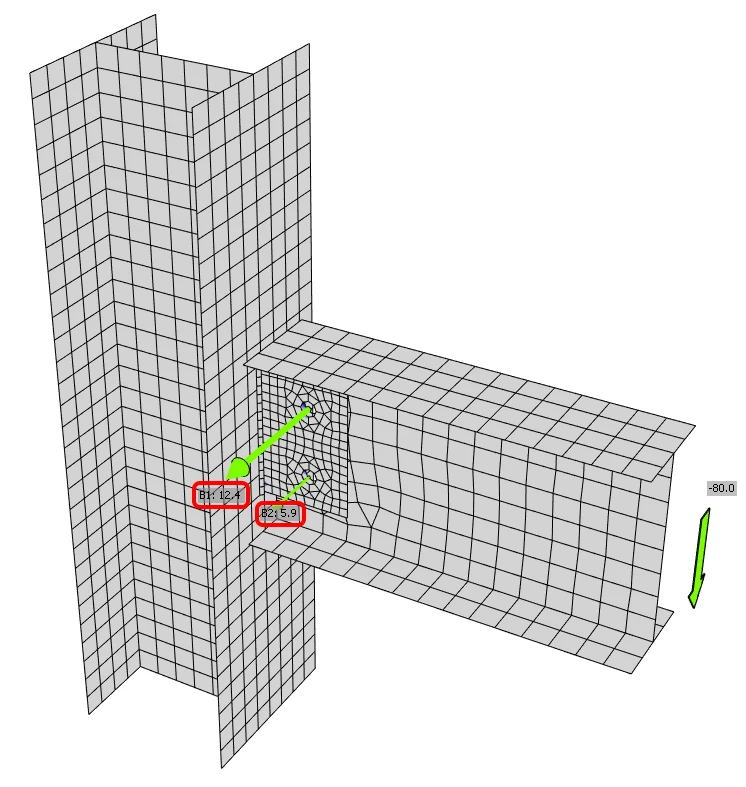
If a double-sided fin plate is used, and the connection is symmetrical, the only tension forces in bolts appear due to the deformation of fin plates because, with the deformations, additional eccentricity is produced.

Higher tension forces in bolts of an end plate connection

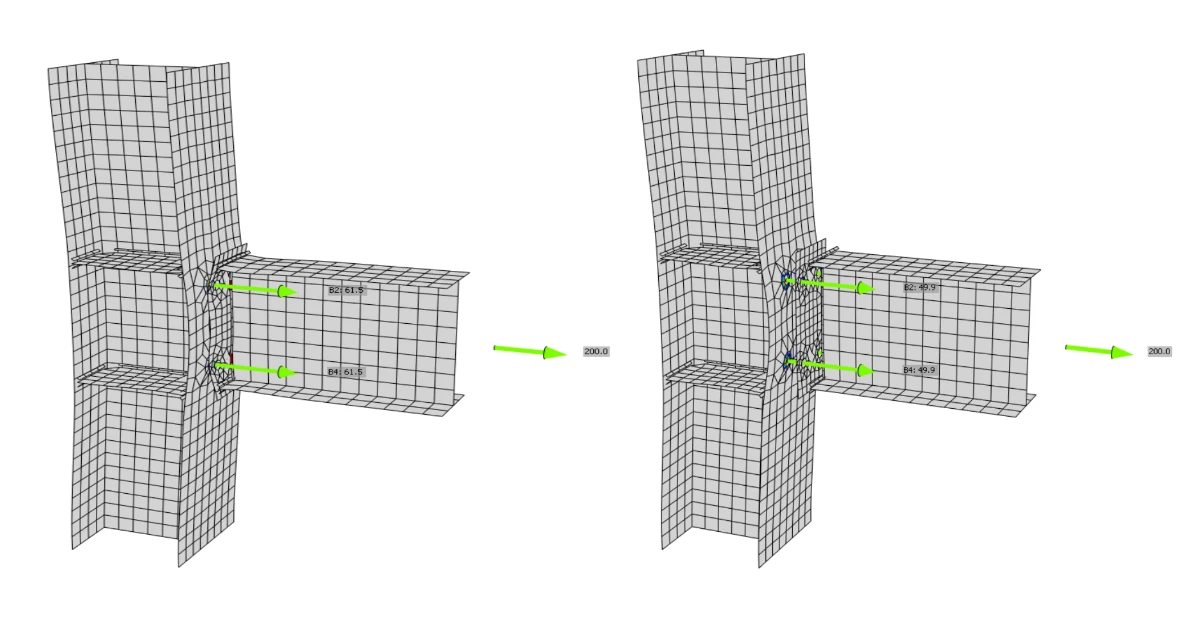
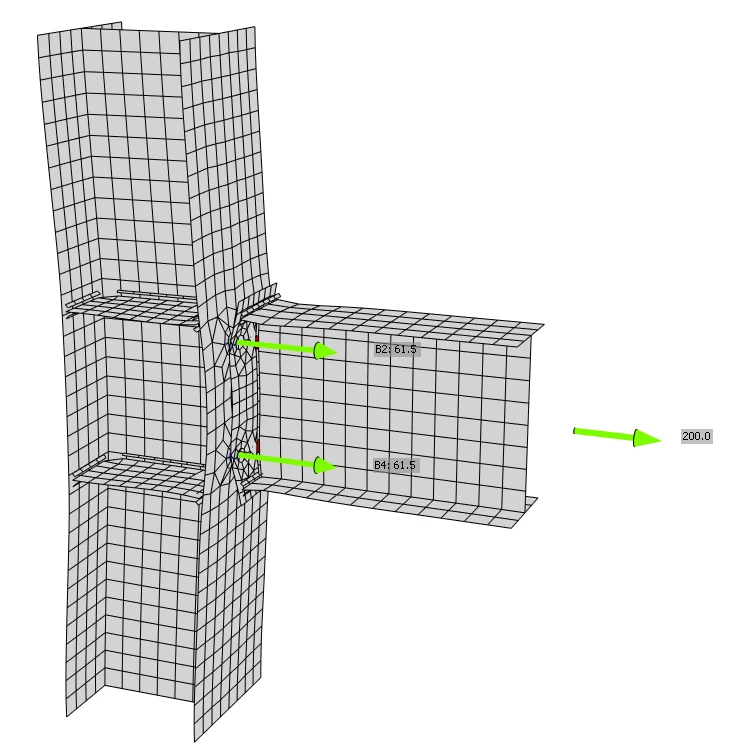
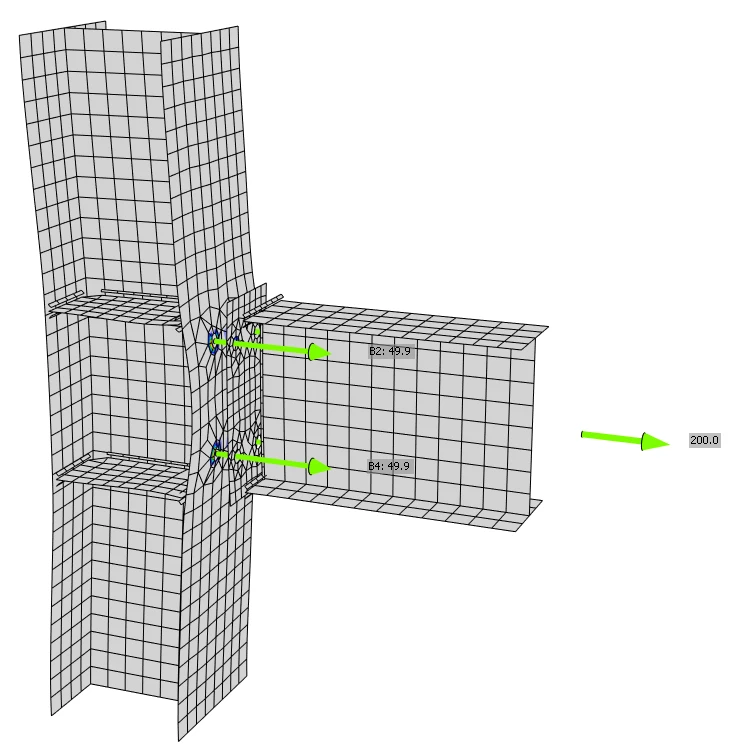
The thinner the end plate is, the more deformation under the given load effects it has. This adds the prying action and additional tensile forces are applied to bolts. If the end plate is thick and thus stiff enough, the prying forces are eliminated. See this effect demonstrated in a simple example:

a) Endplate - thickness 10 mm, applied tension force 200 kN

Resultant tension force in 4 bolts: 61.5 x 4 = 246 kN
b) Endplate - thickness 40 mm, applied tension force 200 kN

Resultant tension force in 4 bolts: 49.9 x 4 = 200 kN
Different tension forces in bolts by the bolt grade

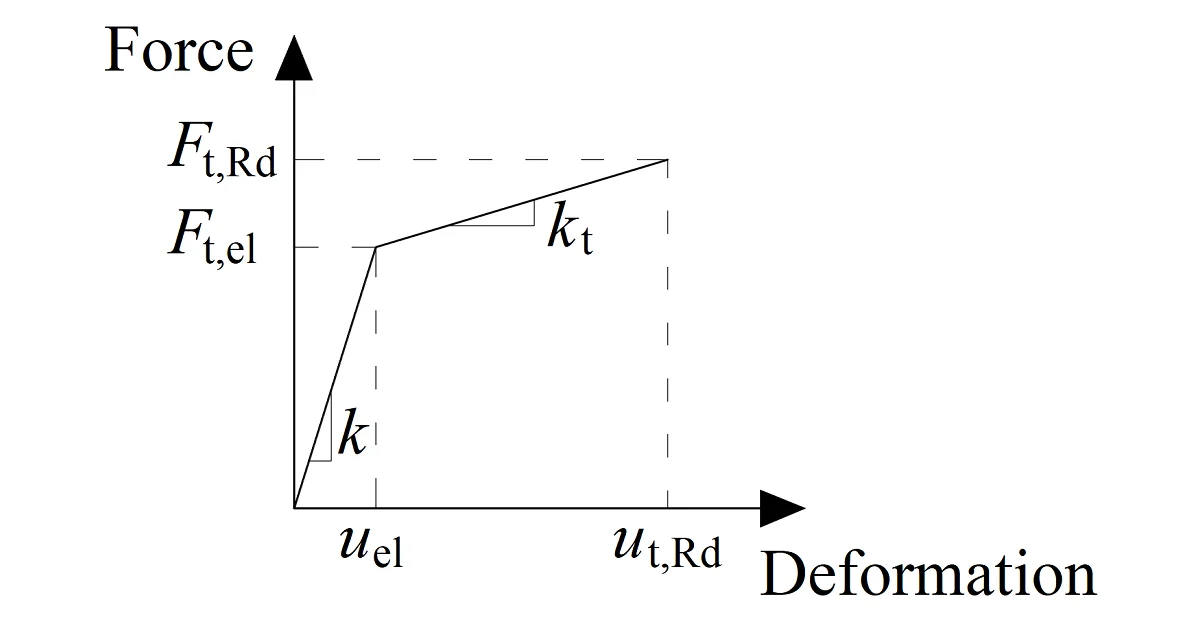
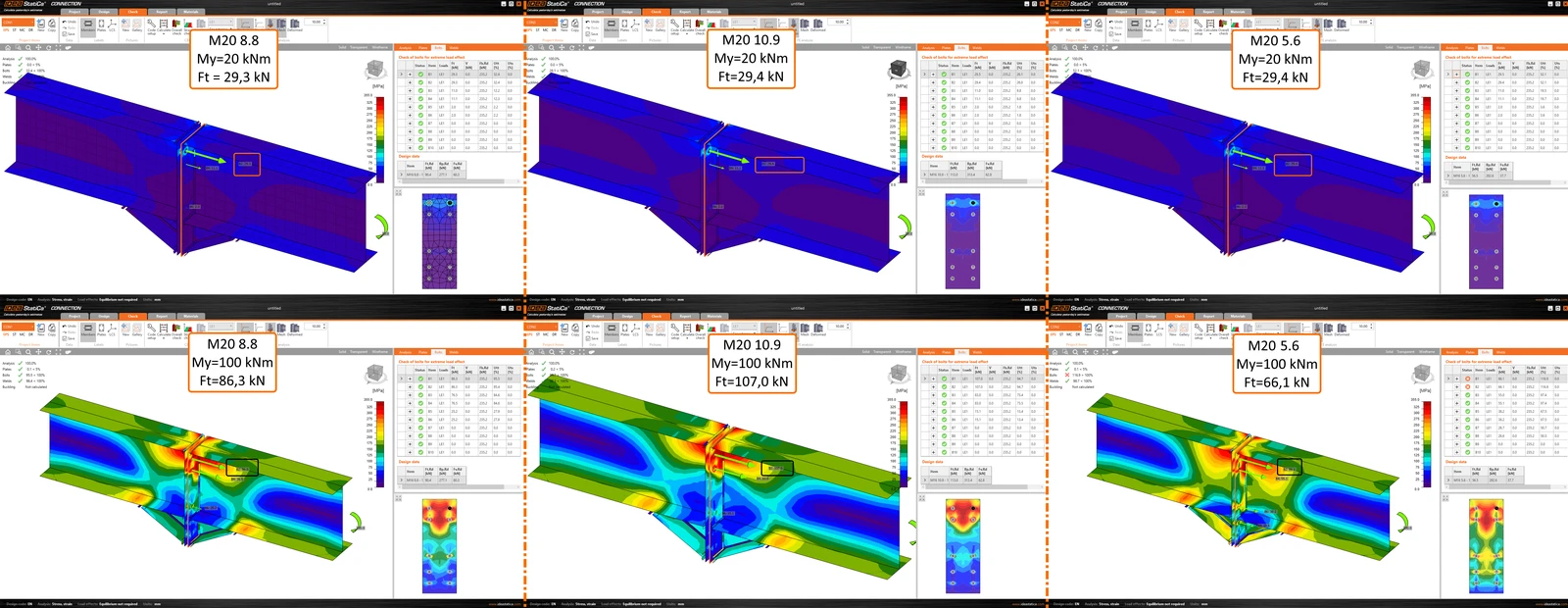
Each bolt grade has a different working diagram and different values of yield strength. In an endplate connection of two beams loaded by a bending moment, the comparison of three different bolt grades (8.8, 10.9, and 5.6) of an M20 bolt is demonstrated.

For relatively low load effects the resulting tension forces in bolts per each grade show similar values.

But for load effects that result in high utilization of bolts (and plastification in bolts), the tension force varies depending on the bolt grade. The higher the bolt grade, the higher the resulting tension force.
For more information, see the theoretical background, and the video recording.
Related articles

Bolt shear force calculated per shear plane
  • Steel
  • Connection
  • EN (Eurocode)
  • Overall check
  • CBFEM
  • Bolts
  • AISC (USA)
  • +7
  • Steel
  • Connection
  • EN (Eurocode)
  • Overall check
  • CBFEM
  • Bolts
  • AISC (USA)

Knowledge base

Bolt shear force calculated per shear plane

Read more
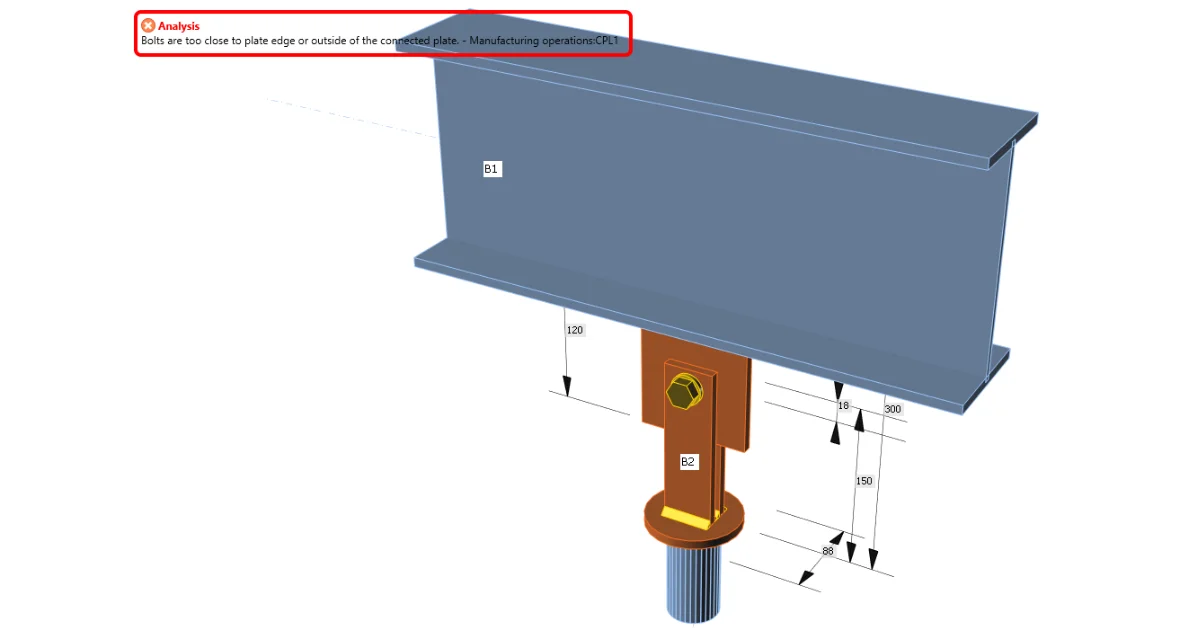
Bolts are too close to plate edge
  • Steel
  • Connection
  • Bolts
  • Manufacturing operations
  • Plates
  • +5
  • Steel
  • Connection
  • Bolts
  • Manufacturing operations
  • Plates

Knowledge base

Bolts are too close to plate edge

Read more
Limitations of through bolts and hollow sections
  • Steel
  • Connection
  • EN (Eurocode)
  • AISC (USA)
  • Bolts
  • +5
  • Steel
  • Connection
  • EN (Eurocode)
  • AISC (USA)
  • Bolts

Knowledge base

Limitations of through bolts and hollow sections

Read more
IDEA StatiCa Connection theoretical background for the structural design of steel connections. Bolts and preloaded bolts, shear resistance, and behavior in tensile-shear interaction. Structural design of welded and bolted connections.
  • Steel
  • Connection
  • AISC (USA)
  • AS (Australia)
  • CSA (Canada)
  • EN (Eurocode)
  • IS (India)
  • GB (China)
  • HKG (Hong Kong)
  • SP 16 (Russia)
  • CBFEM
  • Bolts
  • +12
  • Steel
  • Connection
  • AISC (USA)
  • AS (Australia)
  • CSA (Canada)
  • EN (Eurocode)
  • IS (India)
  • GB (China)
  • HKG (Hong Kong)
  • SP 16 (Russia)
  • CBFEM
  • Bolts

Knowledge base

Bolts and preloaded bolts connections

Read more