


In countries governed by AASHTO (American Association of State Highway and Transportation Officials), such as the United States, regions led by U.S.-based projects, and markets that adopt U.S. standards (Latin America, the Middle East, and parts of Asia), structural engineers must follow strict requirements and design methodologies for transportation infrastructure. AASHTO provides the specifications, manuals, and guidance needed to design compliant bridges, highways, rail structures, and foundations.
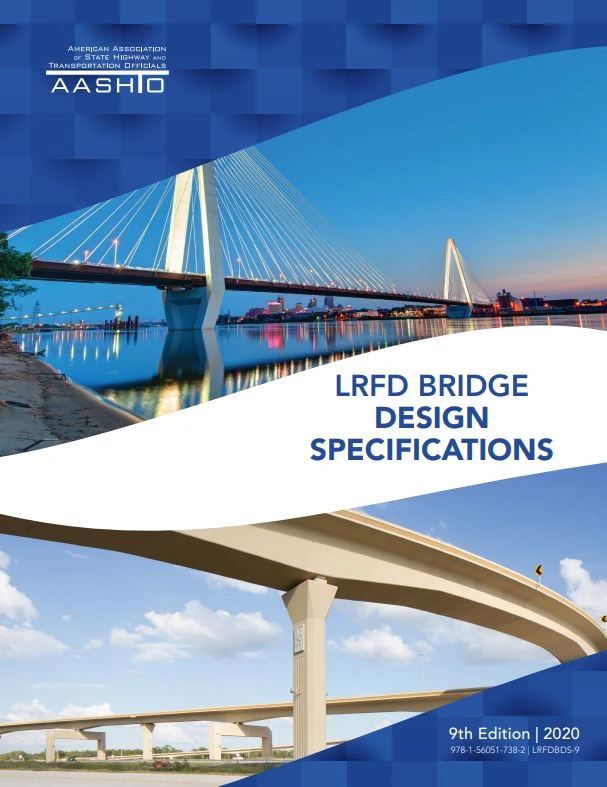
IDEA StatiCa now brings the AASHTO LRFD Bridge Design Specifications into its Concrete apps (Detail 3D and 2D). This means structural engineers around the world have the ability to design projects with multi-code environments through flexible code switching and a unified computational engine.
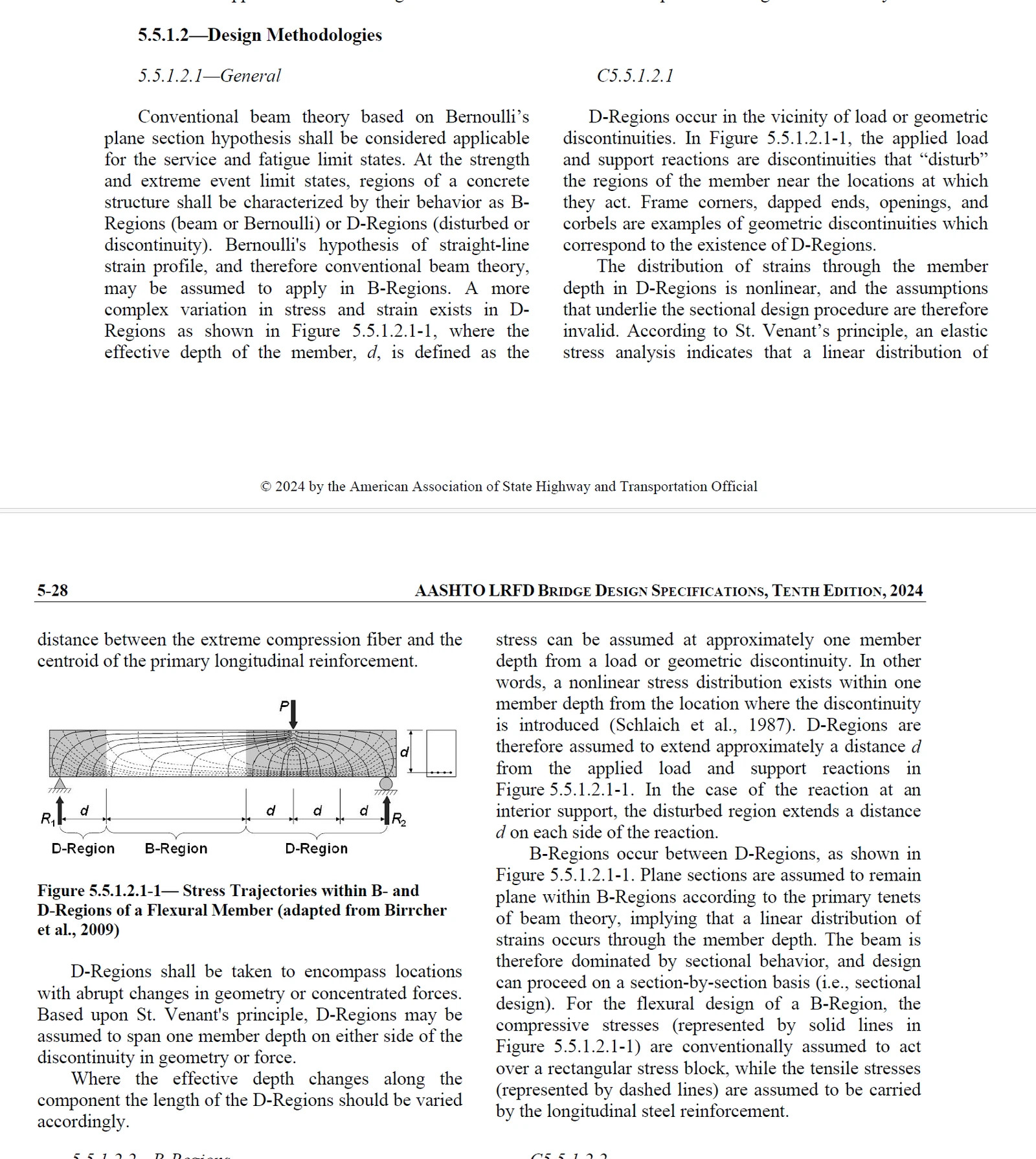
The AASHTO LRFD Bridge Design Specifications, like other design codes, use the strut-and-tie methodology for regions where beam theory cannot be applied (discontinuity regions aka D-regions). The Detail application from the IDEA StatiCa suite is used to design these D-regions using the Compatible Stress Field Method (CSFM), which determines stresses and strains in reinforced concrete by enforcing equilibrium and compatibility across the structure.
Detail reports the stresses, strains, deflections, and cracks in reinforced concrete under applied loads and load combinations. Based on these results, the application then performs the code check of D-regions using the material factors defined in the respective design codes.
What is implemented from AASHTO?
- Sample projects: A series of ready-to-use project templates, including bridge frame joints, beam ends, bridge diaphragms, bridge abutments, retaining walls, and pier caps.

Super structure details

Diaphragms

Bridge abutments

Pier caps
- Material models: The CSFM model requires defined material behavior curves, which are typically specified by each design code. In this case, AASHTO material models for concrete and steel reinforcement are used. More details are available in the theoretical background of the Detail app.

- Stress-strain diagrams for serviceability: long-term and short-term serviceability effects are considered using the AASHTO formulas.

- Resistance load factors (general approach to the D-regions): Once the stresses, strains and deflections are calculated in Detail, the software compares them vs the strength of the materials multiplied by a resistance factor. By using the code factors, the application helps to code check the D-regions per AASHTO provisions.
- ϕc =0.7 Resistance factor for concrete - Article 5.5.4.2
- ϕs =0.9 Resistance factor for reinforcement - Article 5.5.4.2
- ϕp =1.0 Resistance factor for prestressing reinforcement - Article 5.5.4.2
- Strength limit state checks (material utilization ratio, bond strength): Following the analysis of stresses in the concrete, reinforcement, and anchorage zones, the software evaluates their utilization by comparing the demand to the corresponding material capacities.
- Concrete strength - fc /fc,lim
- Reinforcement strength - fs /fy,lim
- Anchorage (bond shear stress) - τb /fbu
- Service limit state checks: Based on the analysis results, the software evaluates serviceability by checking stress limitation in prestressed models, short and long term deflection, and crack width.
- Stress limitation - σp /σp,lim
- Deflection - uz,tot
- Crack width -w /wlim
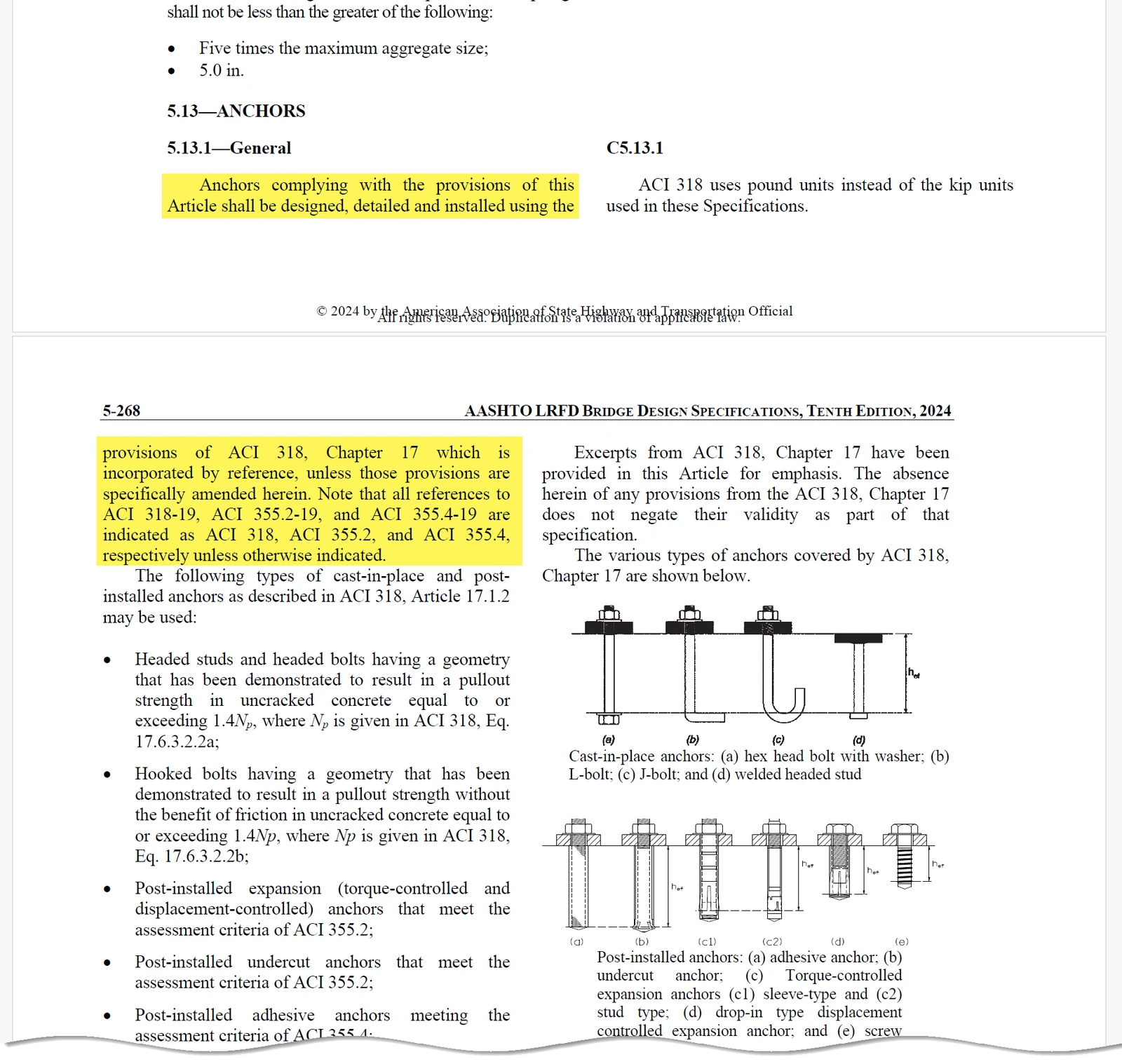
The AASHTO LRFD Bridge Design Specifications include a chapter on anchoring to concrete (5.13 – Anchors), which states that anchors designed in compliance with AASHTO must follow the provisions of ACI 318.
IDEA StatiCa Detail 3D is a solution for anchoring design and reinforced concrete, where engineers can analyze, visualize, and confirm how loads transfer from the anchors through reinforced concrete. You can learn more about these checks in the following article: Complete code-check of anchors and concrete block in Detail 3D (ACI)
Summary
From now on, structural engineers designing transportation infrastructure projects such as bridges, miscellaneous structures within highways, rail, public transportation, and foundations can use IDEA StatiCa Detail to save them time. It allows them to replace Strut-and-Tie methodology with more optimized design. Here are the key reasons engineers rely on the IDEA StatiCa Detail app for their projects:
- Flexibility to model any geometry: Model any D-region your project requires, including custom reinforcement
- Load path visibility: Visualize the actual stress flow in the structure, considering reinforced concrete
- Compliance with international codes: ACI, AASHTO, Eurocode
- Deflection and crack width calculation
- Generate detailed deliverables: Produce clear documentation to support faster approval
Learn more about AASHTO code checks in the theoretical background, and explore the sample projects available in the application to start designing under AASHTO today.