
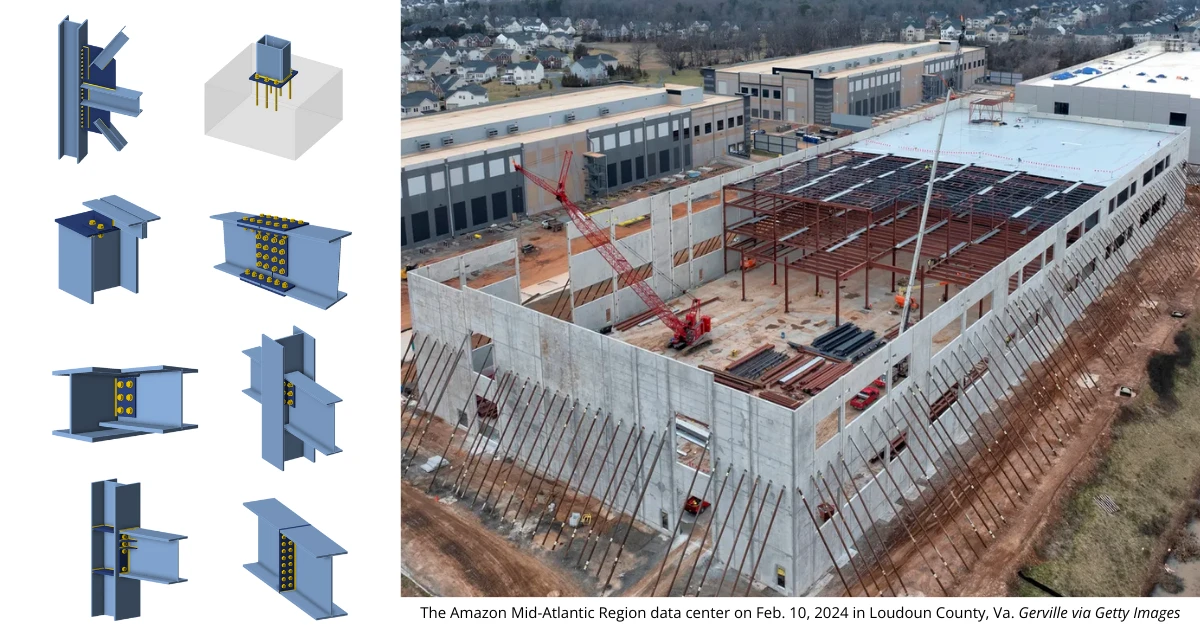


In the AISC Steel Construction Manual, chapters 10 through 15 summarize the most common standard steel connections used in practice. While these details are well known, they still need to be checked, documented, and reported for each project. In data center structures, where most framing can be grouped into a limited number of connection types, the real challenge is doing this work efficiently and consistently across nearly identical connections.
This month, we’ll focus on building a reusable library of standard connections for data center projects. With the rapid growth in data center construction driven by the AI boom, having pre-defined, verified connections ready to reuse can significantly reduce design time. These connections can be quickly pulled into new projects and used to generate clear, visual reports with minimal effort.
In this post, we’ll explore how IDEA StatiCa can help you save time creating common AISC-based connections.
At the end of this post, you’ll find a link to download a file containing the listed connections to use directly in IDEA StatiCa.
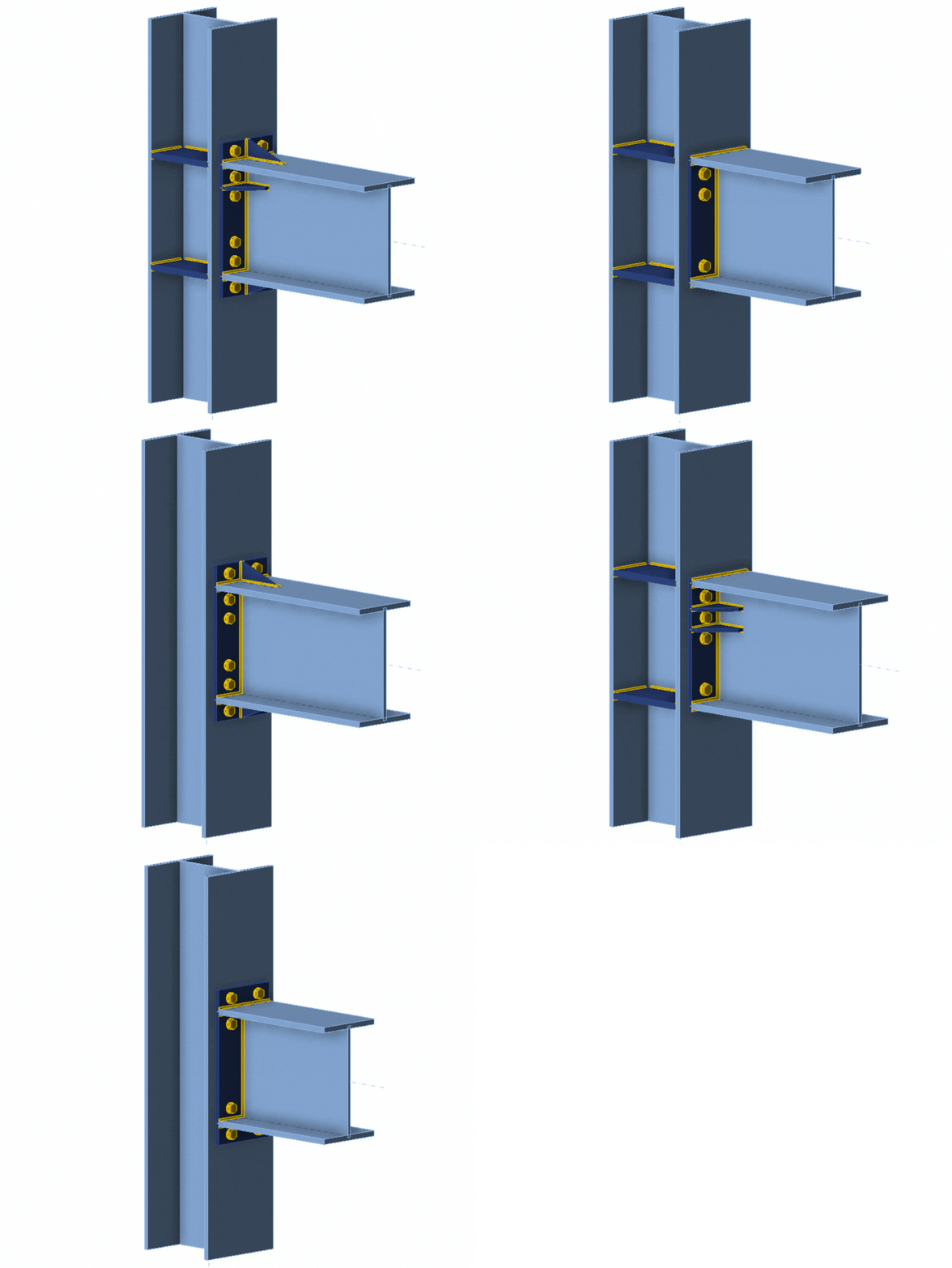
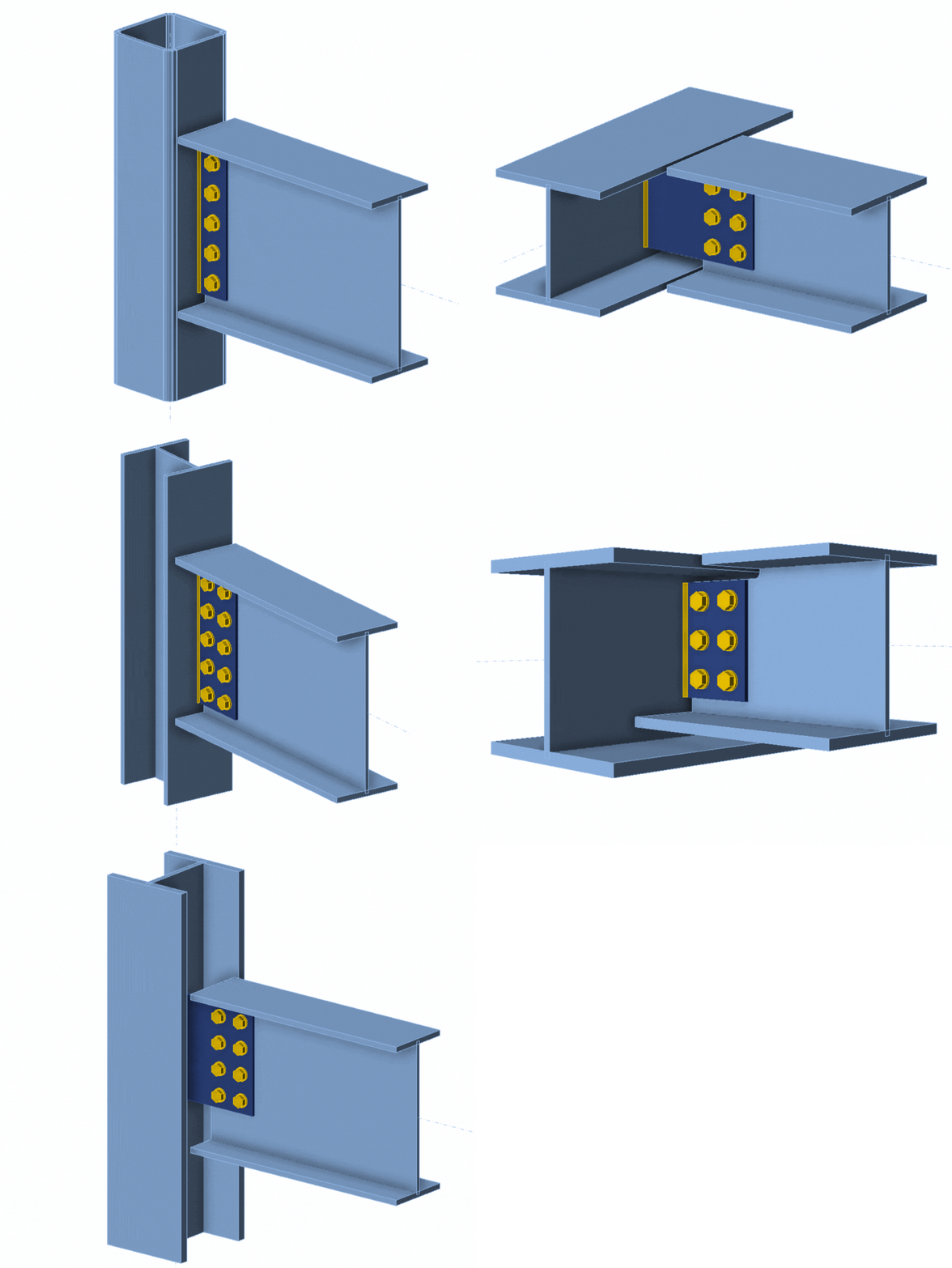
1. Beam-to-Column End Plate Connection
End plate connections are widely used to connect beams to columns while transferring some moment. They are simple to fabricate and quick to install, making them ideal for modular framing in data centers.
IDEA StatiCa Operations:
End Plate: Standard bolted moment connection from beam to column
Shifted End Plate: Accounts for offsets or column placement variations
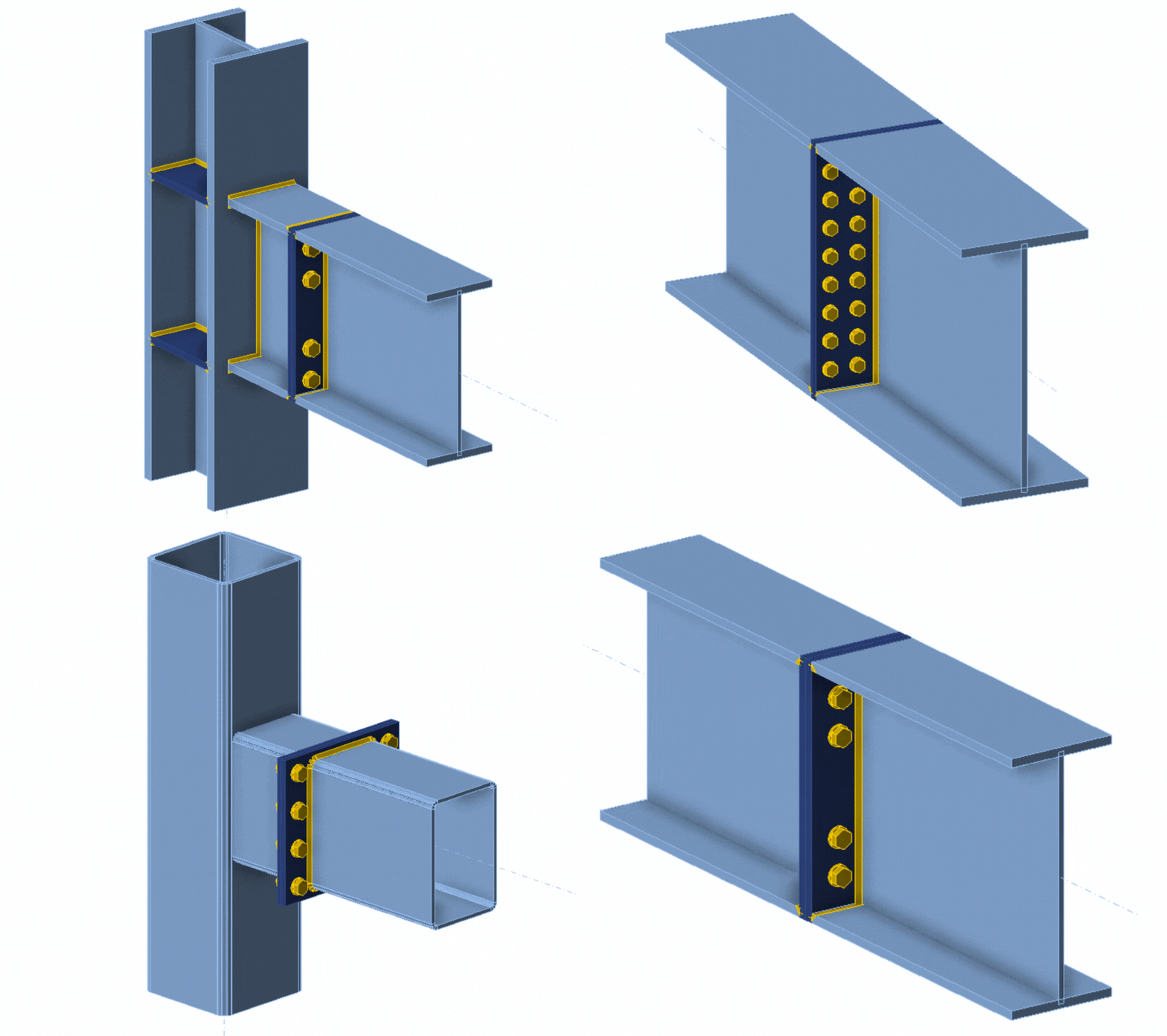
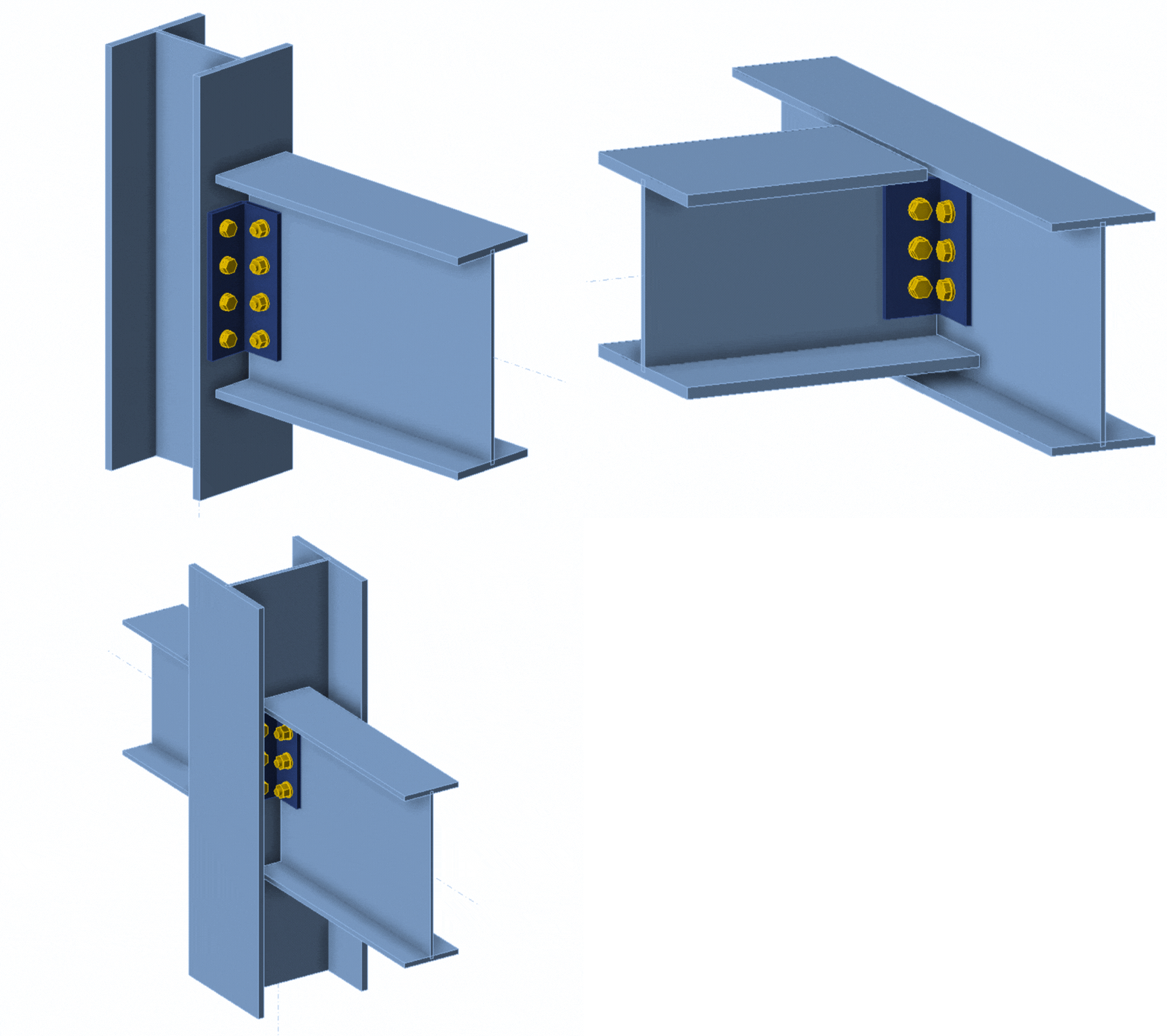
2. Plate-to-Plate Beam Connection
These connections are used when forces must transfer through an intermediate plate, often in cases where beams intersect or forces need redistribution.
IDEA StatiCa Operations:
- Plate-to-Plate: Transfers shear and moment through an intermediate plate
- Stub: Short beam segment, used for framing adjustments or constructability
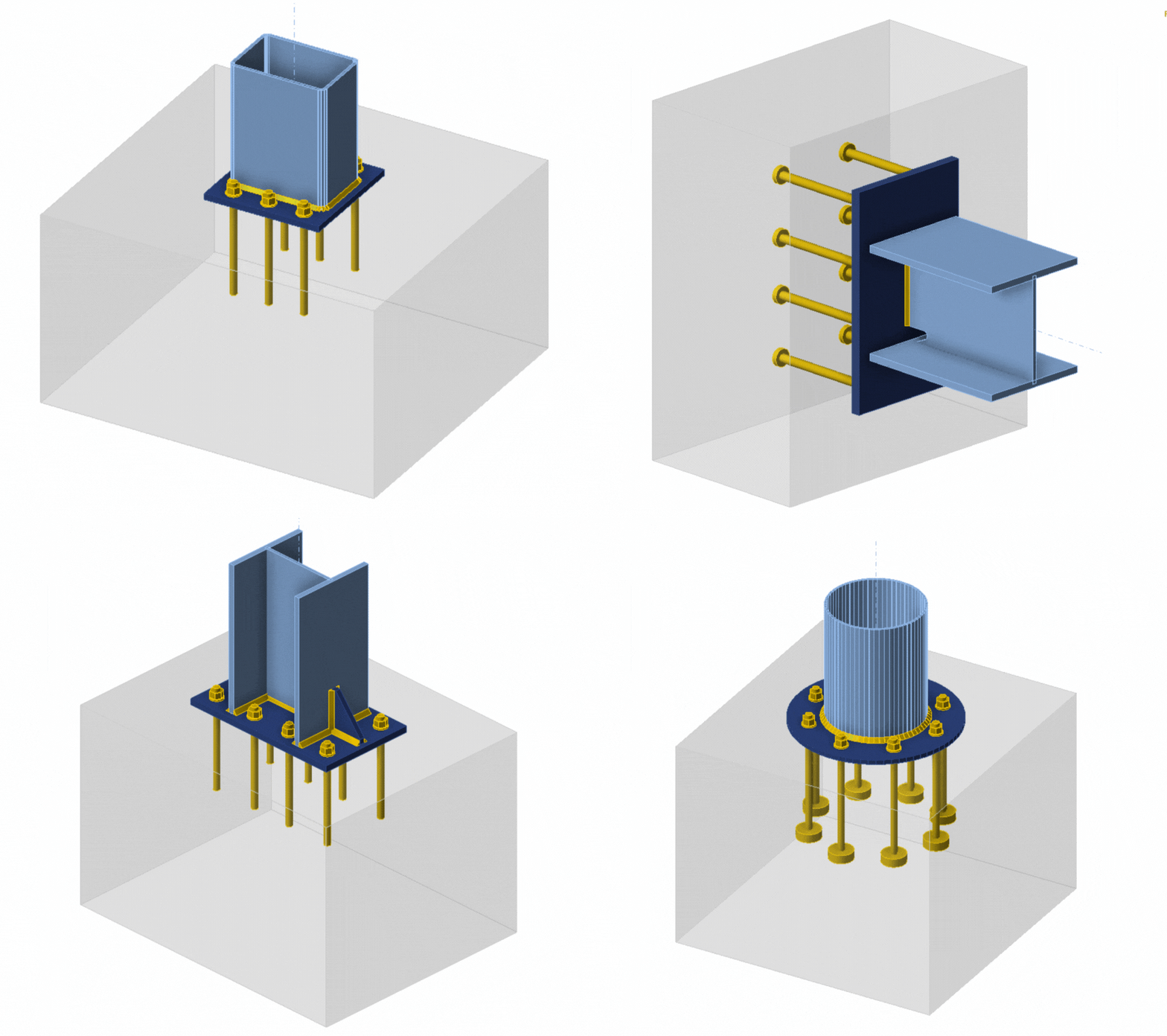
3. Base Plate (Steel to Concrete Connections)
Base plates transfer axial and lateral loads from steel columns to concrete foundations. They are critical for stability and often include anchors or stiffeners.
IDEA StatiCa Operations:
- Base Plate: Standard column-to-foundation connection, includes anchor checks. Pre- or post-installed anchors can be modeled and checked
4. Shear Plate Connection
Shear plates are used to connect beams to columns or girders where rotation is allowed, and only shear transfer is required.
IDEA StatiCa Operations:
- Shear Plate: Single plate connection for beam-to-column or beam-to-girder
5. Clip Angle Connection
Clip angles are simple, versatile connections for beams to columns or girder framing. They are common where speed of fabrication and flexibility are important.
IDEA StatiCa Operations:
- Clip Angle: Bolted-bolted or bolted-welded angle connection for shear transfer
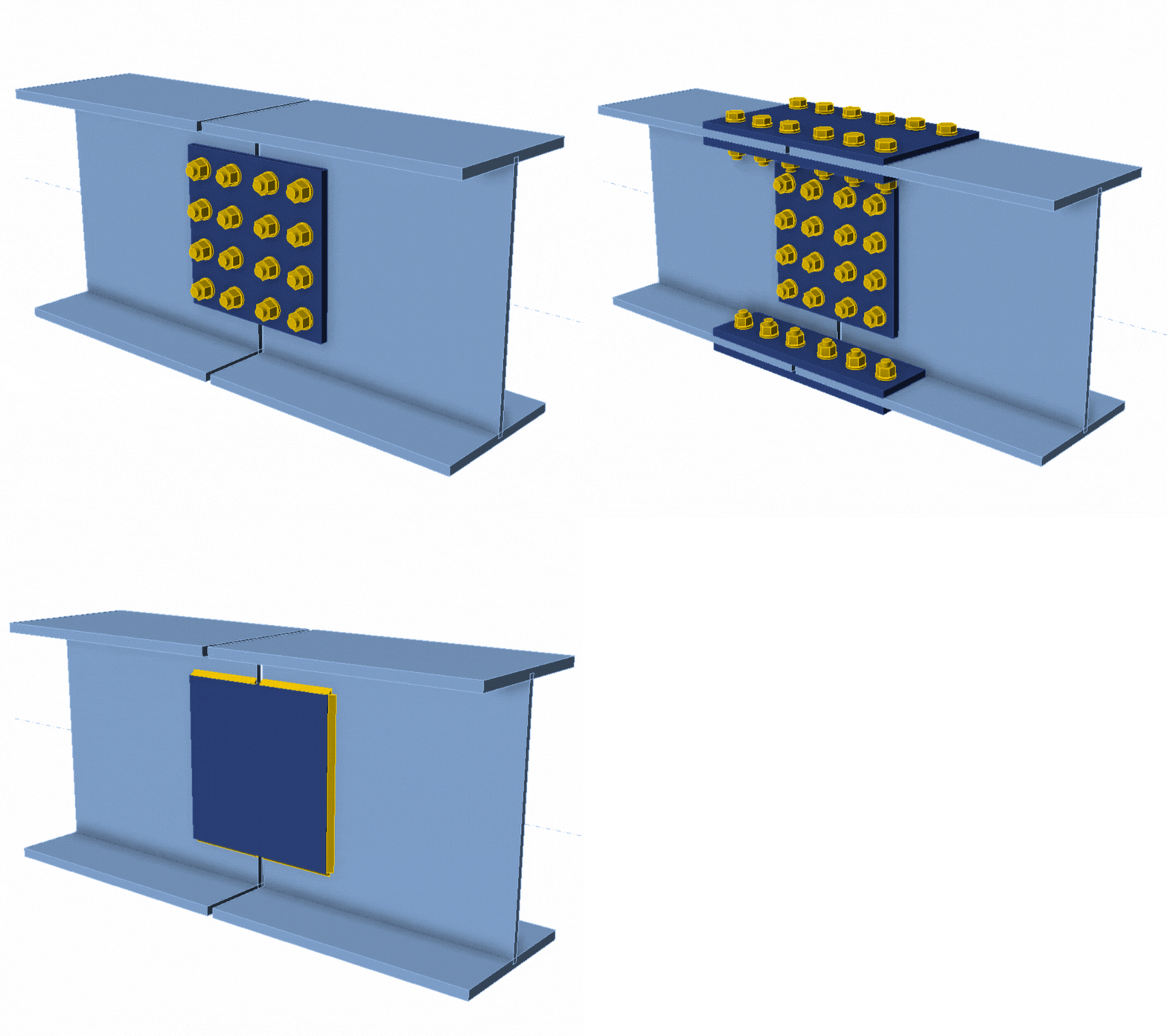
6. Splice Connection
Splices join two beams or columns where one piece is not sufficient. They are common in long-span framing or when handling shipping constraints.
IDEA StatiCa Operations:
- Splice: Transfers shear and moment between connected members
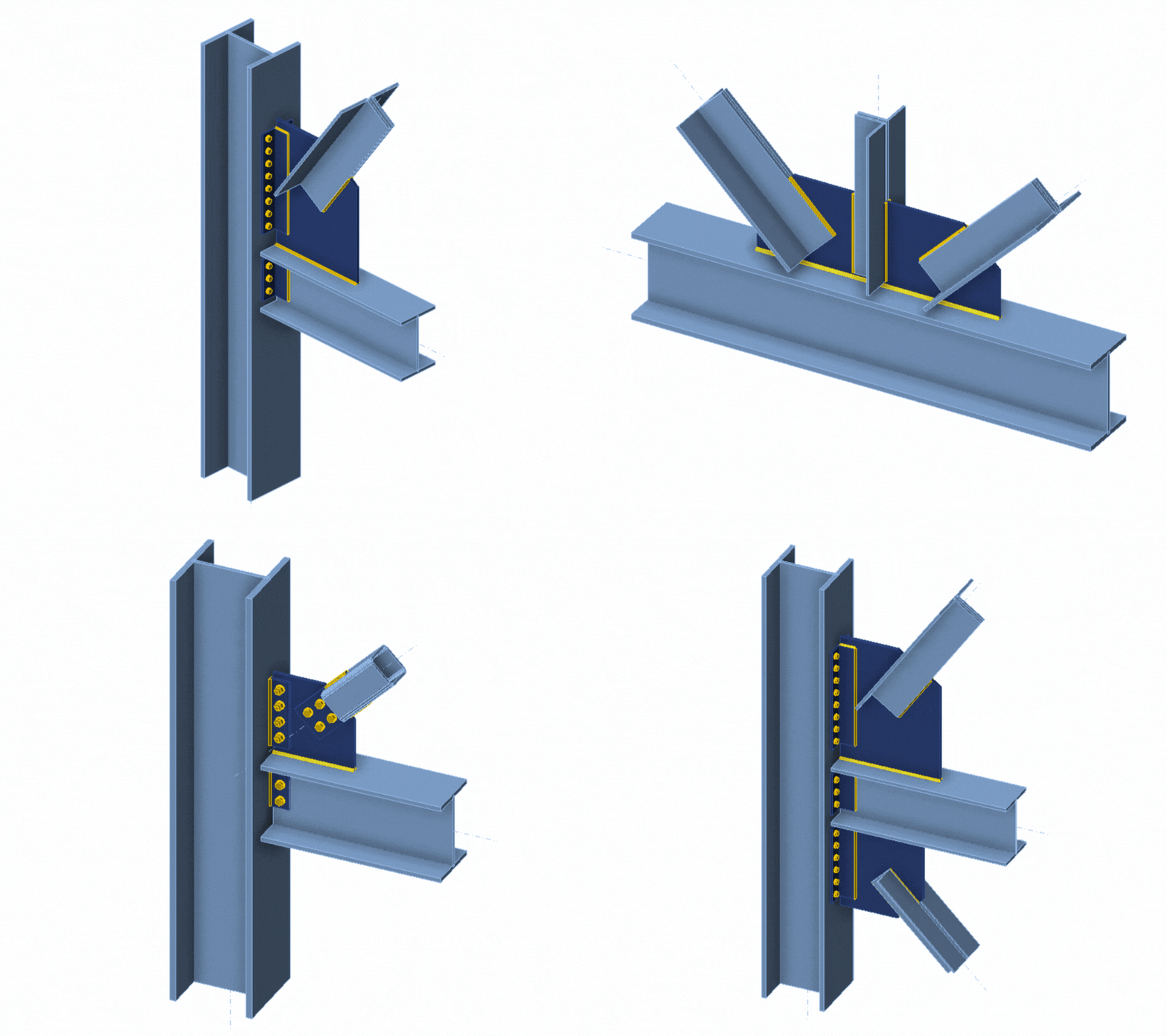
7. Bracing Connection
Gusset plates are typically used to connect bracing members to beams, columns, or trusses. They transfer axial forces and stabilize the frame laterally.
IDEA StatiCa Operations:
- Gusset Plate: Models brace-to-frame connection with correct geometry and force transfer
- Connecting Plate: Transfers axial forces through a plate between members
8. Joist-to-Beam or Joist-to-Column Connection
Joists are used throughout data centers, especially for roof framing, and their connections are usually treated as routine. Even so, the way a joist connects to a beam or column can vary from one location to another. Checking these connections with the actual loads helps ensure nothing is overlooked.
IDEA StatiCa Operations:
- Clip Angle: Represents typical joist seat or bolted angle support
- Stiffening Member: Models stiffeners added to beams or columns to support joist connections.
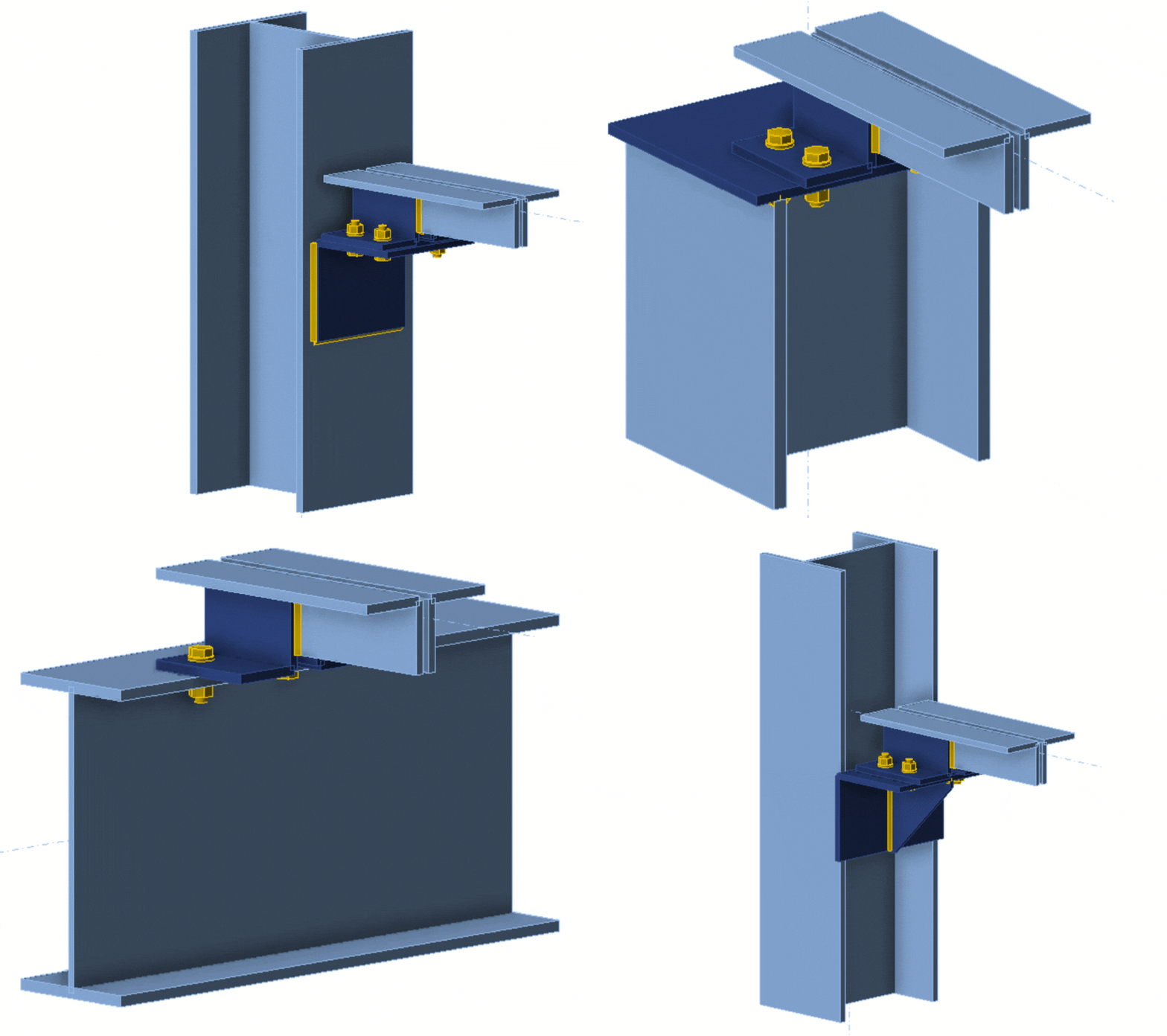
To help you put this into practice, you’ll find a link here to download a file containing these standard connections, ready to use directly in IDEA StatiCa.
If you’d like to see how these connections are created—and learn how to build your own reusable connection library to save time on future projects—watch our webinar, where we walked through the workflow step by step.
Don't have IDEA StatiCa yet? Try it out for 14 days with a free trial.
Try out IDEA StatiCa for free
- Concrete
- Reinforced concrete
- Blog post
Top Five Most Common Base Plate Types
Read more
- Connection design
- Steel
- Knowledge base
Anchor and cast-in plate design: Guided workflow for safe, efficient connections
Read more
- Concrete
- Knowledge base
Cast-in plates in Detail
Read more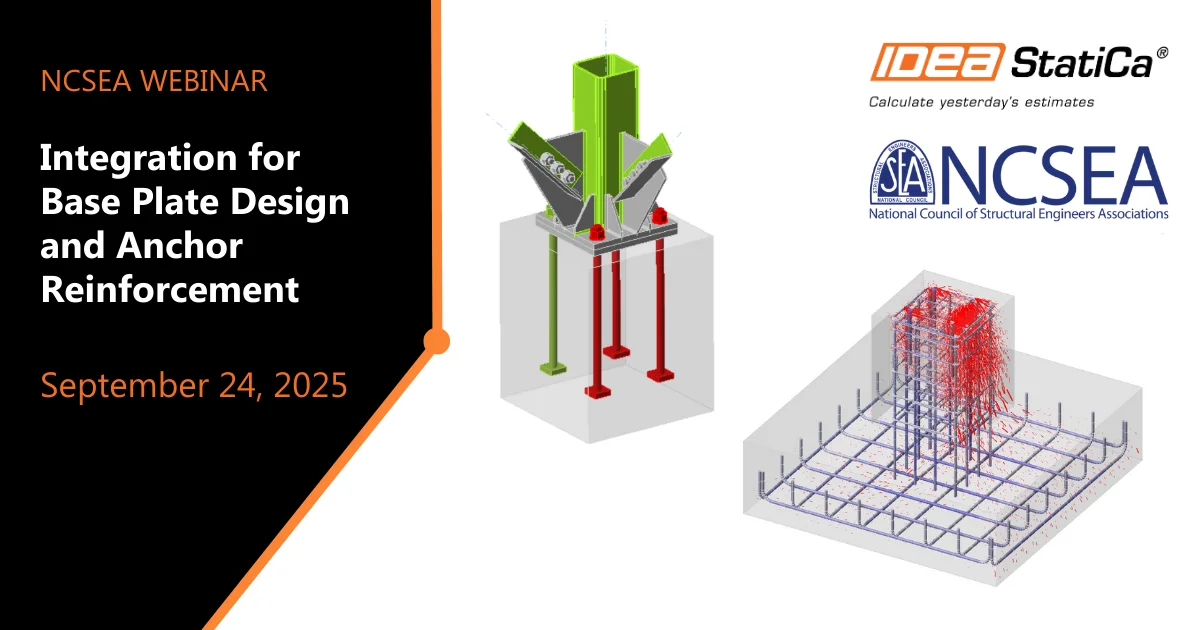
- Steel
- Connection design
- Reinforced concrete
- Concrete
- Webinar