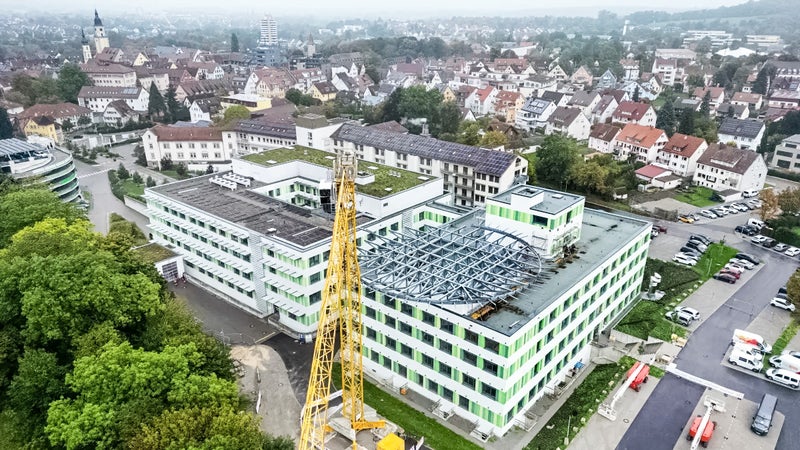
Complessa piattaforma di atterraggio per elicotteri ospedalieri a sbalzo
Informazioni sul progetto
La struttura è progettata come un sistema di travi reticolari a due falde che costituisce la sottostruttura in acciaio della piattaforma di atterraggio per elicotteri. Numerose travi reticolari primarie e secondarie si intersecano in una fitta rete di nodi, con ciascun nodo che collega barre diverse ad angoli diversi.
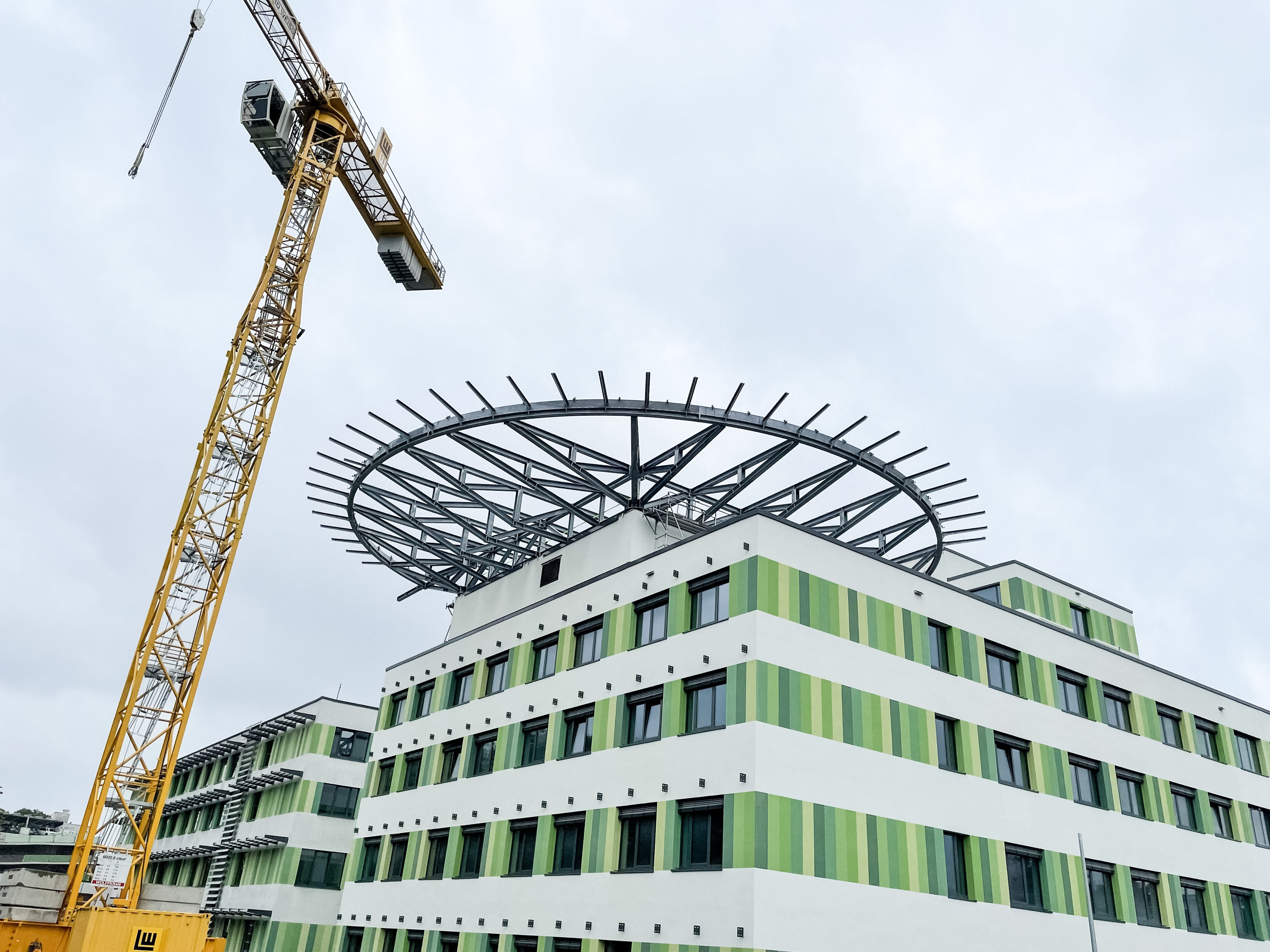
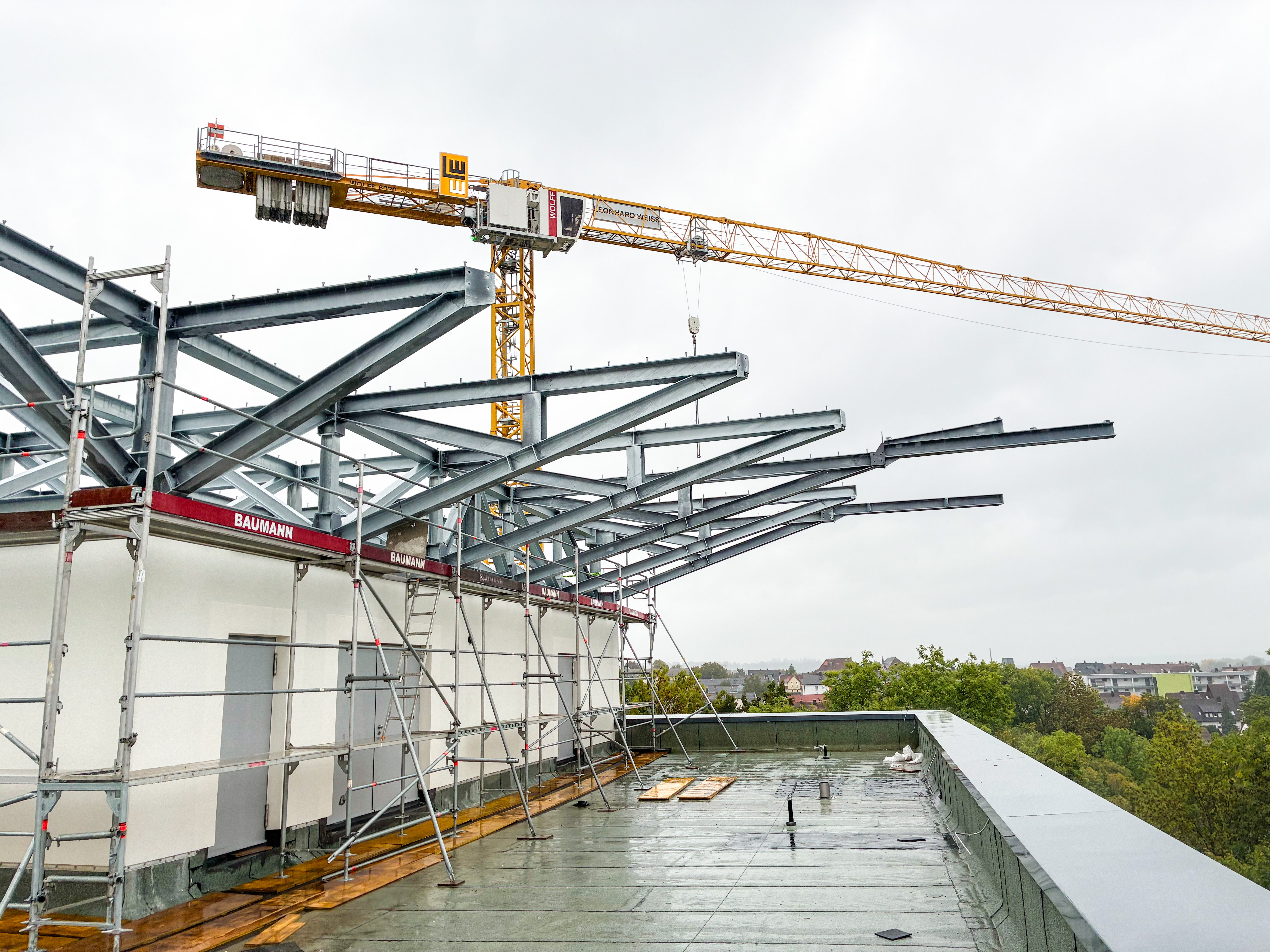
DESA Ingénieurs-Conseils s.à r.l. era responsabile della progettazione e del controllo normativo della sottostruttura in acciaio, in collaborazione con gli ingegneri strutturali principali, l'architetto e il costruttore metallico. Il risultato è una piattaforma ibrida in calcestruzzo e acciaio in grado di accogliere voli di soccorso sul tetto dell'ospedale.
Sfide tecniche
L'aspetto più impegnativo del lavoro di ingegneria è stata la definizione dettagliata dei carichi e la traduzione delle forze dell'analisi globale in un modello a livello di collegamento.
Decine di nodi richiedevano accurate combinazioni di carico allo SLU, ma la documentazione statica globale forniva solo forze inviluppo che non si verificavano necessariamente in modo simultaneo. Ciò comportava il rischio di sovradimensionamento o, peggio, di ipotesi non conservative.
La configurazione strutturale presentava ulteriori sfide: un elevato numero di collegamenti, barre che si intersecano ad angoli irregolari, strategie di fabbricazione miste (collegamenti saldati all'interno di unità prefabbricate e collegamenti bullonati per il montaggio in cantiere), e la necessità di organizzare in modo efficiente il trasporto e il sollevamento di grandi segmenti di travi reticolari.
Ogni operazione di montaggio richiedeva il coordinamento con l'appaltatore metallico per ridurre al minimo il numero di collegamenti bullonati in cantiere senza compromettere l'integrità strutturale.
Soluzioni e risultati
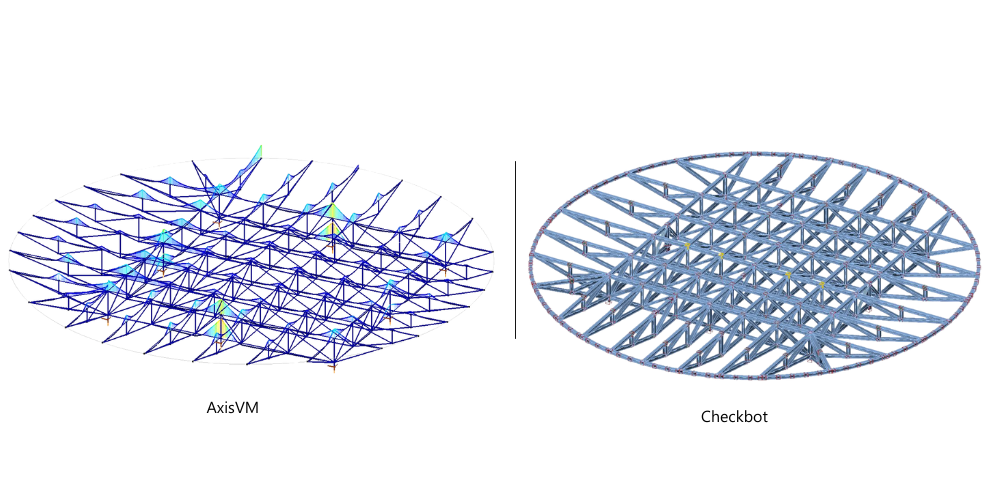
Per ottimizzare il flusso di lavoro, l'ingegnere ha ricostruito l'analisi globale originale in AxisVM utilizzando coordinate e proprietà degli elementi importate tramite VisualBasic, Excel e l'interfaccia COM di AxisVM. Dopo che il modello ricreato ha riprodotto accuratamente i calcoli statici forniti, il team ha utilizzato l'interfaccia BIM per esportare il modello direttamente in IDEA StatiCa Checkbot. Con una minima post-elaborazione, principalmente la fusione di elementi per definire correttamente le barre continue, l'ingegnere ha ottenuto geometria e casi di carico completamente sincronizzati da utilizzare in IDEA StatiCa Connection.
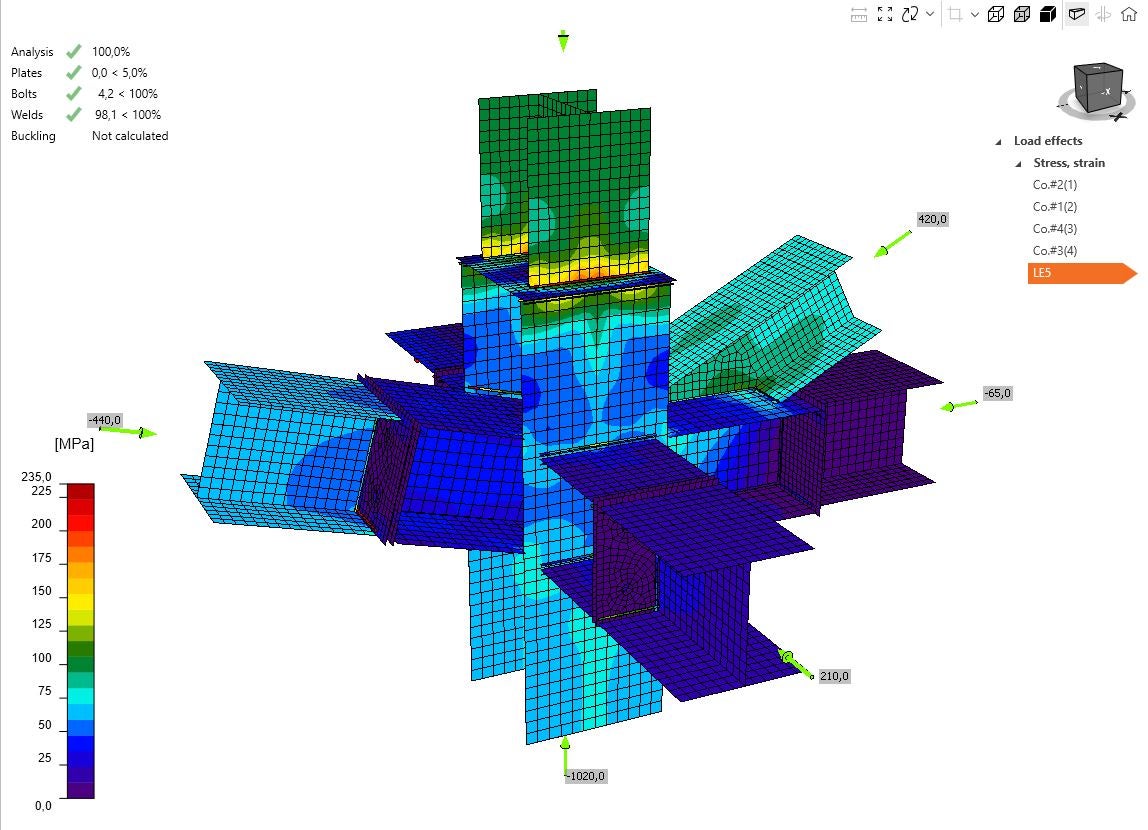
Questo flusso di lavoro collaborativo si è rivelato significativamente più efficiente e affidabile rispetto all'estrazione manuale delle forze. IDEA StatiCa ha consentito all'ingegnere di considerare solo i carichi sulle barre concorrenti, riducendo il conservatismo non necessario e il potenziale di errore umano.
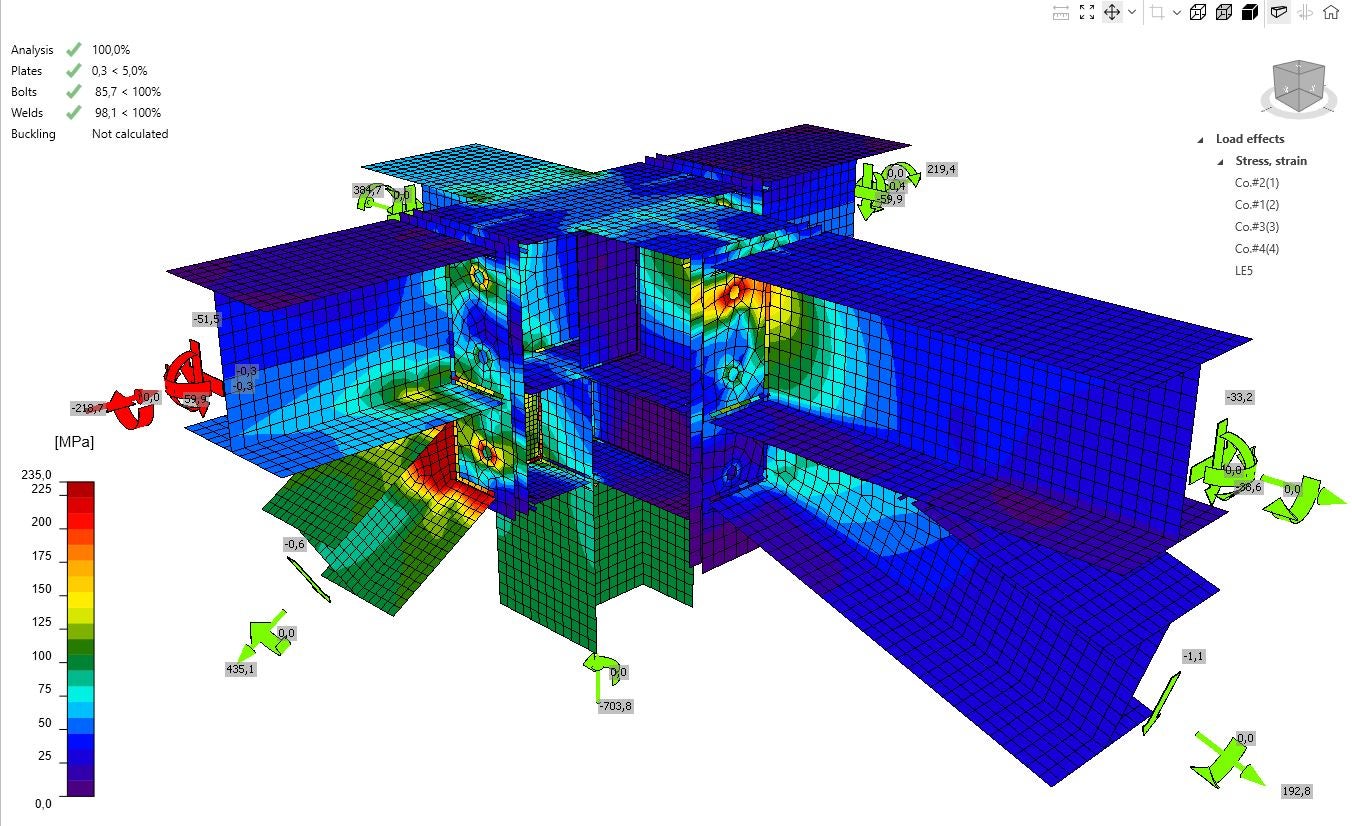
Altre due applicazioni di IDEA StatiCa sono state fondamentali. La Connection Library ha consentito il riutilizzo dei progetti per i numerosi nodi simili ma non identici. La verifica in blocco in Checkbot ha raggruppato i collegamenti simili in modo che un collegamento di riferimento potesse essere analizzato e poi verificato automaticamente sull'intero gruppo, lasciando solo un numero limitato di casi che richiedevano un affinamento locale. Per la comunicazione con l'appaltatore metallico, il file ideacon e il report di calcolo hanno sostituito completamente i tradizionali schizzi. IDEA StatiCa Viewer ha consentito all'appaltatore di ispezionare in modo autonomo la geometria, i carichi e i dettagli dei collegamenti. Anche l'ufficio di ispezione ha utilizzato IDEA StatiCa, consentendo una verifica trasparente dell'intero progetto dei collegamenti.
Utilizzando Checkbot, il collegamento BIM, la libreria e il flusso di lavoro di verifica in blocco, l'ingegnere ha ottenuto un significativo risparmio di tempo, una riduzione del lavoro manuale e ha fornito collegamenti in acciaio completamente ottimizzati e conformi alle normative per la piattaforma per elicotteri.

Informazioni sull'ingegnere di Desa
Il Dr. András Kozma, l'ingegnere responsabile, si è laureato presso l'Università di Tecnologia ed Economia di Budapest (BME) con una specializzazione in strutture da ponte e ingegneria computazionale. Ha successivamente conseguito un dottorato di ricerca presso l'Università del Lussemburgo sui sistemi compositi acciaio-calcestruzzo smontabili. La sua esperienza unisce la ricerca accademica e l'ingegneria pratica, con una forte attenzione ai flussi di lavoro strutturali avanzati e agli ambienti di progettazione digitale integrata.
Prova IDEA StatiCa gratuitamente