Rehabilitación y refuerzo de estructuras de hormigón para un futuro sostenible
En un mundo cada vez más centrado en la sostenibilidad, el llamado a reutilizar y adaptar nuestro entorno construido nunca ha sido tan fuerte. Si bien demoler y construir de nuevo puede parecer un borrón y cuenta nueva, existe un argumento convincente, y a menudo infravalorado, a favor de rehabilitar las estructuras de hormigón existentes. No es solo un desafío técnico, es una apuesta inteligente por el coste, el patrimonio y el planeta.
Prevención frente al colapso
En todo el mundo, esta necesidad se está volviendo urgente. Los puentes y edificios envejecidos, muchos diseñados según normas obsoletas y utilizados mucho más allá de su vida útil original, exigen ahora una reevaluación y revitalización. En Europa, América del Norte y la región Asia-Pacífico, decenas de miles de estructuras ya están clasificadas en mal estado o estado deficiente, y muchas más están pendientes de una investigación detallada. Y colapsos recientes como el del Puente Morandi de Génova o el fallo parcial en Dresde sirven como recordatorios contundentes de lo que ocurre cuando el refuerzo llega demasiado tarde. Normas internacionales como ISO 13822, el Manual de Evaluación de Puentes de AASHTO y las emergentes directrices del Eurocódigo están impulsando un cambio: evaluar primero, reforzar lo que importa y extender la vida útil de las estructuras en las que confiamos cada día.
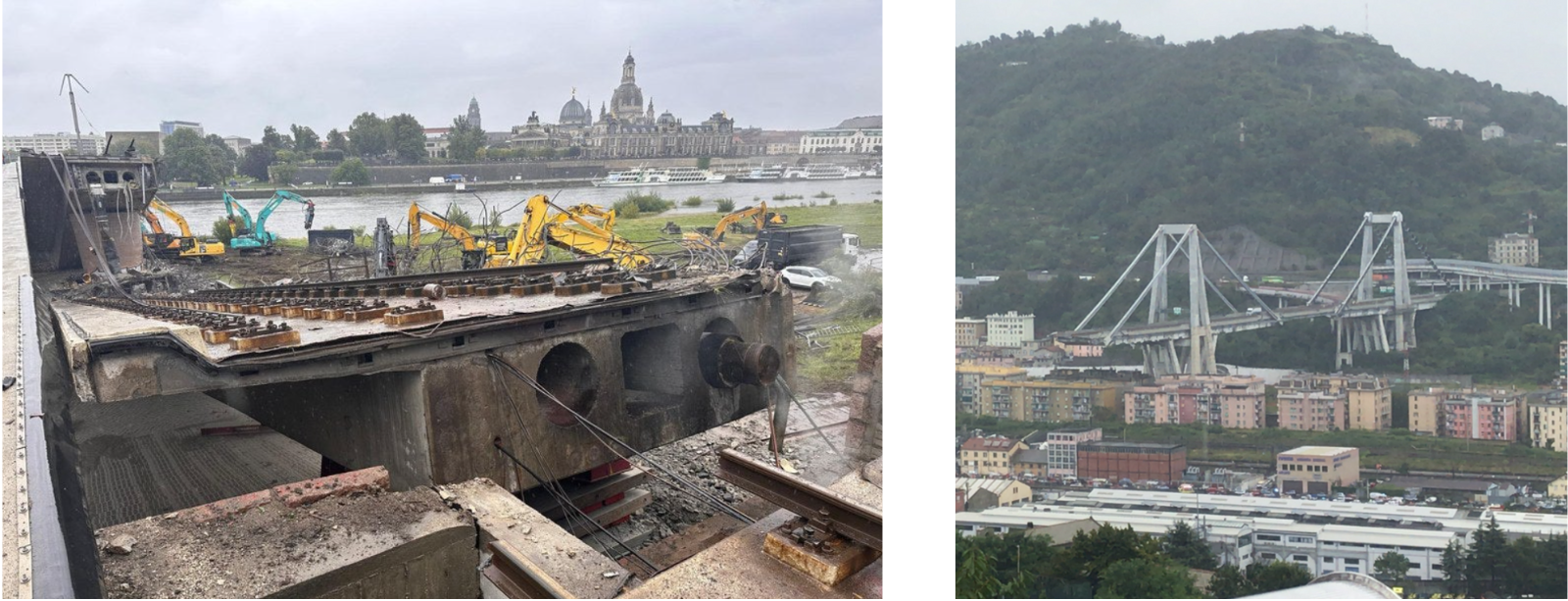
Colapso parcial del puente Carola/Elba (Dresde, 11 sep 2024) y Ponte Morandi (Génova, Italia, 14 ago 2018)
Pero no siempre tiene que tratarse de estructuras significativas; a veces un pequeño detalle puede tener un peso enorme y prevenir grandes problemas.
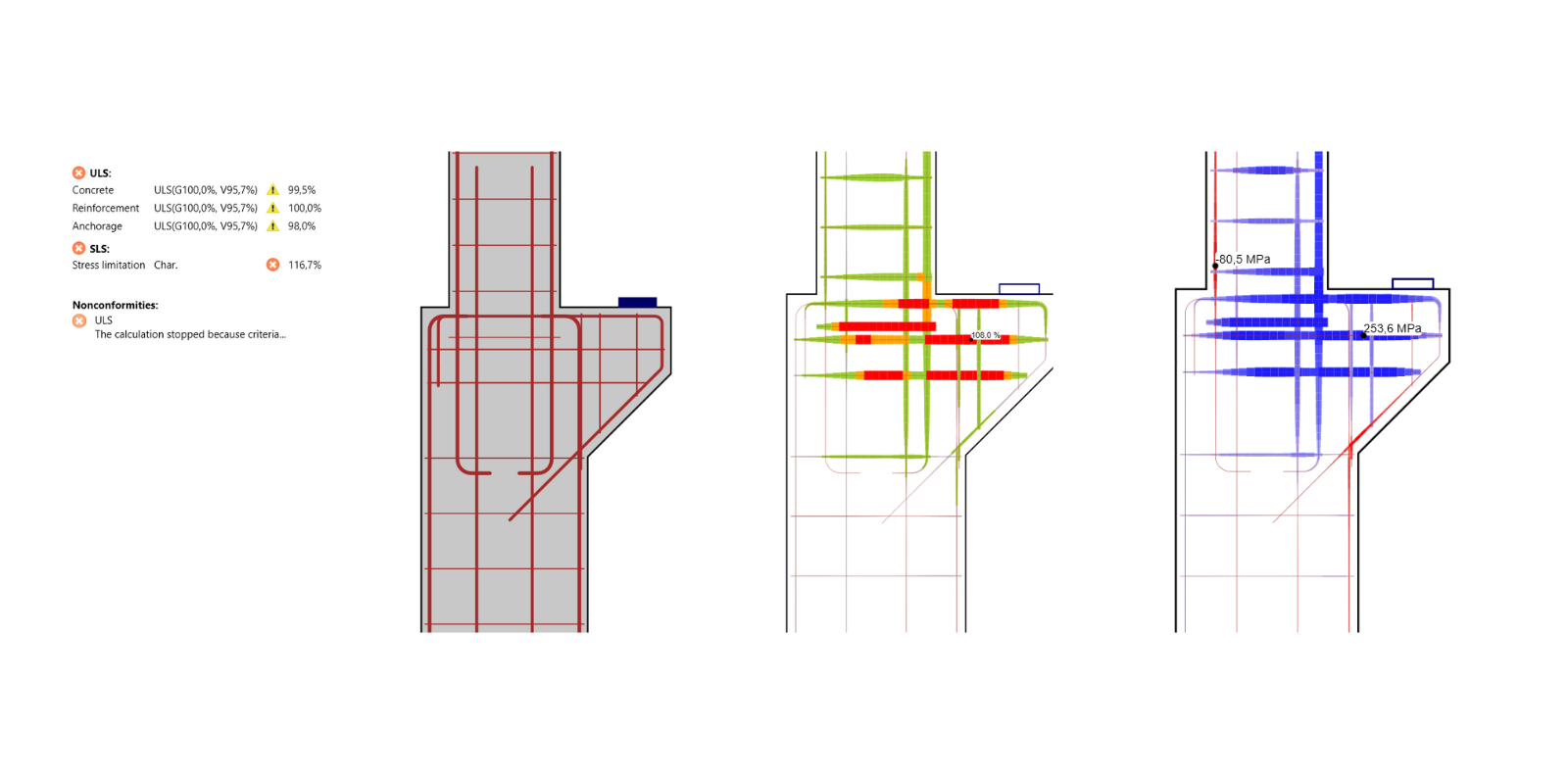
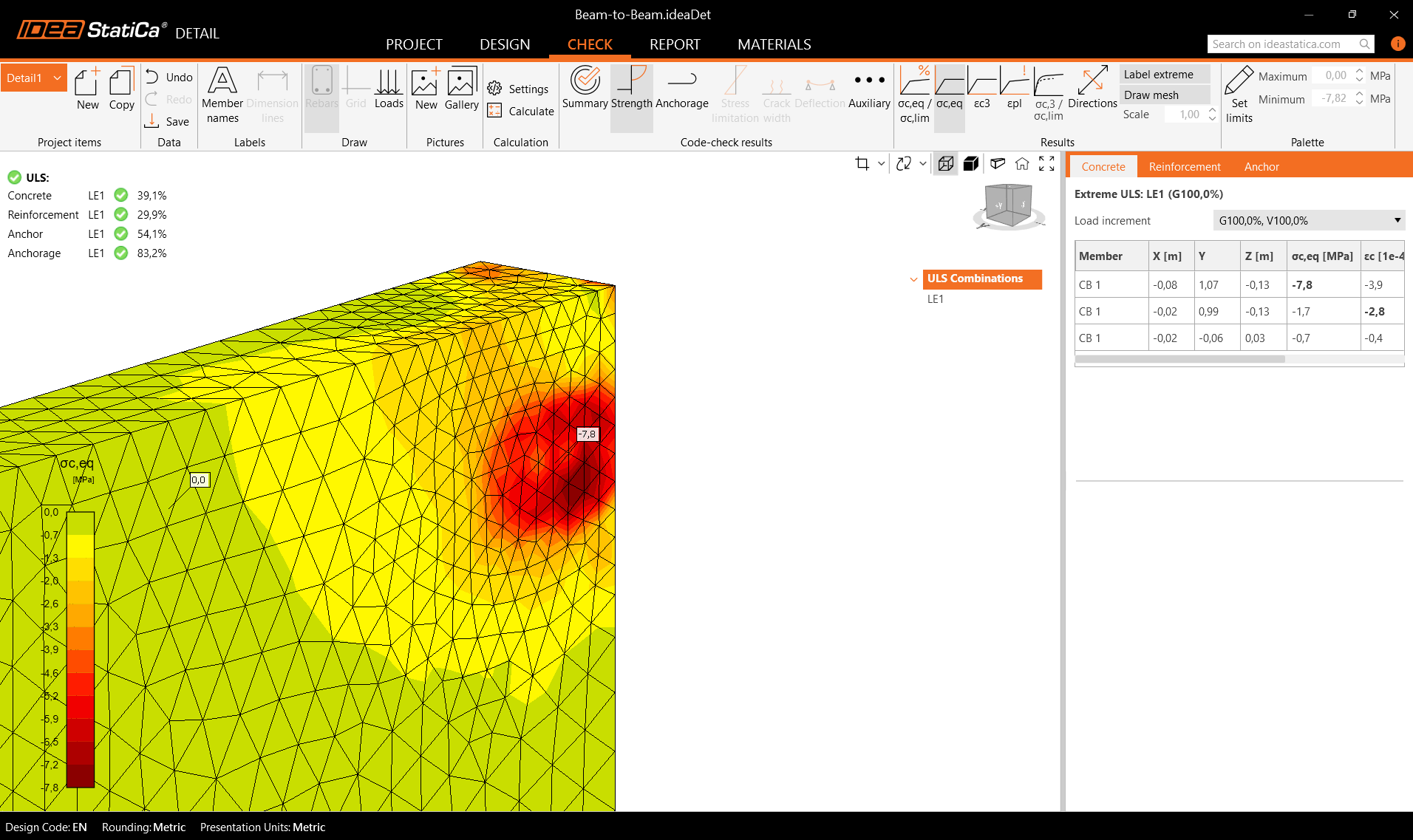
Véase, por ejemplo, una ménsula corta modelada en IDEA StatiCa Detail utilizando los parámetros de armadura existentes pero evaluada para nuevas cargas según las normas actuales. En la primera imagen, se puede ver la disposición de la armadura, la utilización y la tensión en las barras. La estructura falla, con la capacidad limitada por tensiones de tracción excesivamente altas que la armadura existente no puede asumir.
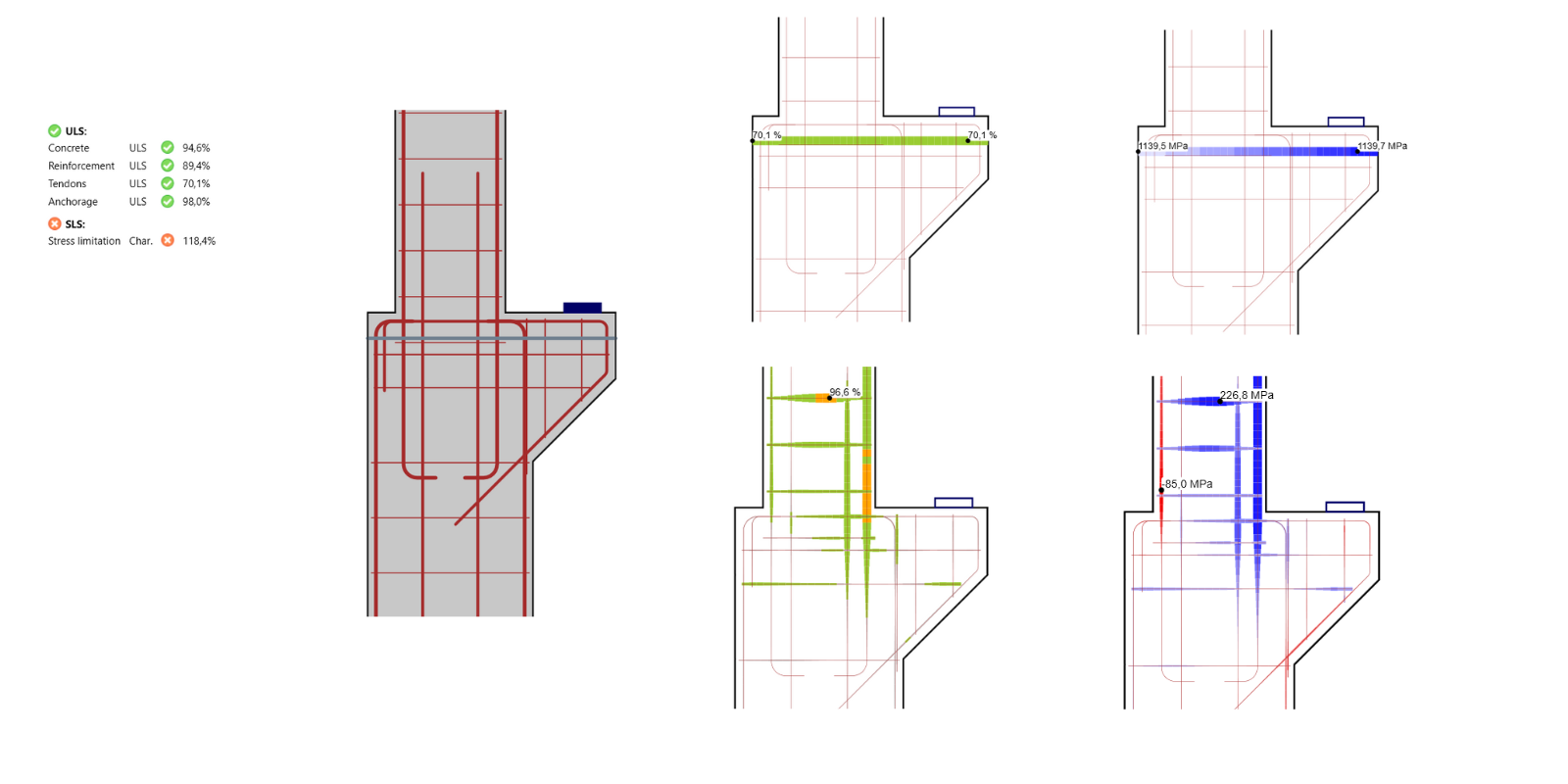
La siguiente imagen muestra la versión reforzada, utilizando ahora barras no adherentes. Esto elimina casi por completo la tensión de tracción en la armadura y soporta de forma segura las cargas en estado límite último, demostrando cómo una rehabilitación específica puede mejorar drásticamente el rendimiento incluso en un elemento aparentemente menor.
Más adelante profundizaremos en IDEA StatiCa Detail y en la gama de funciones que ofrece para el refuerzo, pero por ahora, centrémonos en la pregunta que plantea este ejemplo...
Hormigón antiguo, nuevas normas
Las estructuras de hormigón construidas hace décadas fueron diseñadas según normas muy diferentes. Las propiedades de los materiales se asumían en lugar de medirse. La armadura era a menudo lisa en lugar de corrugada. Las longitudes de anclaje eran más cortas. El detallado en las regiones D era más simple, a veces demasiado simple. Las fisuras pueden haberse desarrollado gradualmente a lo largo de años de servicio, pero ahora deben considerarse en una nueva realidad de carga.
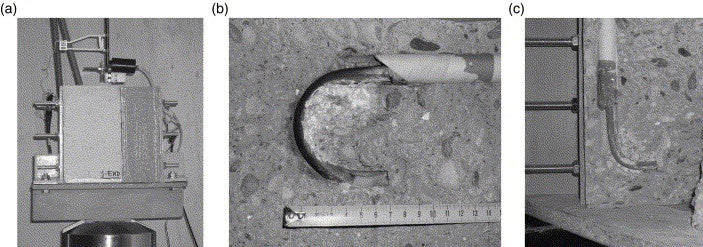
Barras lisas – imagen de Experimental behaviour of anchored smooth rebars in old type reinforced concrete buildings, de Giovanni Fabbrocino, Gerardo M. Verderame, Gaetano Manfredi
Todas estas incertidumbres se acumulan. Los ingenieros a menudo descubren que el material existente simplemente no se ajusta a las hipótesis requeridas por las normas actuales. Especialmente cuando la verificación se basa principalmente en seguir patrones empíricos que fueron determinados mediante ensayos y experiencia, ¡pero bajo condiciones completamente diferentes! El análisis lineal estándar pierde relevancia. Y la pregunta de repente se convierte en: ¿Cuál es la capacidad real de este elemento estructural existente hoy, no hace décadas?
Rehabilitación frente a reconstrucción
Al comparar el refuerzo de una estructura existente con la construcción de una nueva, las respuestas se inclinan cada vez más hacia la rehabilitación, tanto financiera como medioambientalmente. Es curioso cómo la gente se centra en la sustituibilidad principalmente en el contexto de los nuevos materiales. Eso puede estar bien, pero solo mientras construyamos en un solar libre y no tengamos que lidiar con la demolición. Sinceramente, a veces el enfoque más ecológico es simplemente reutilizar.
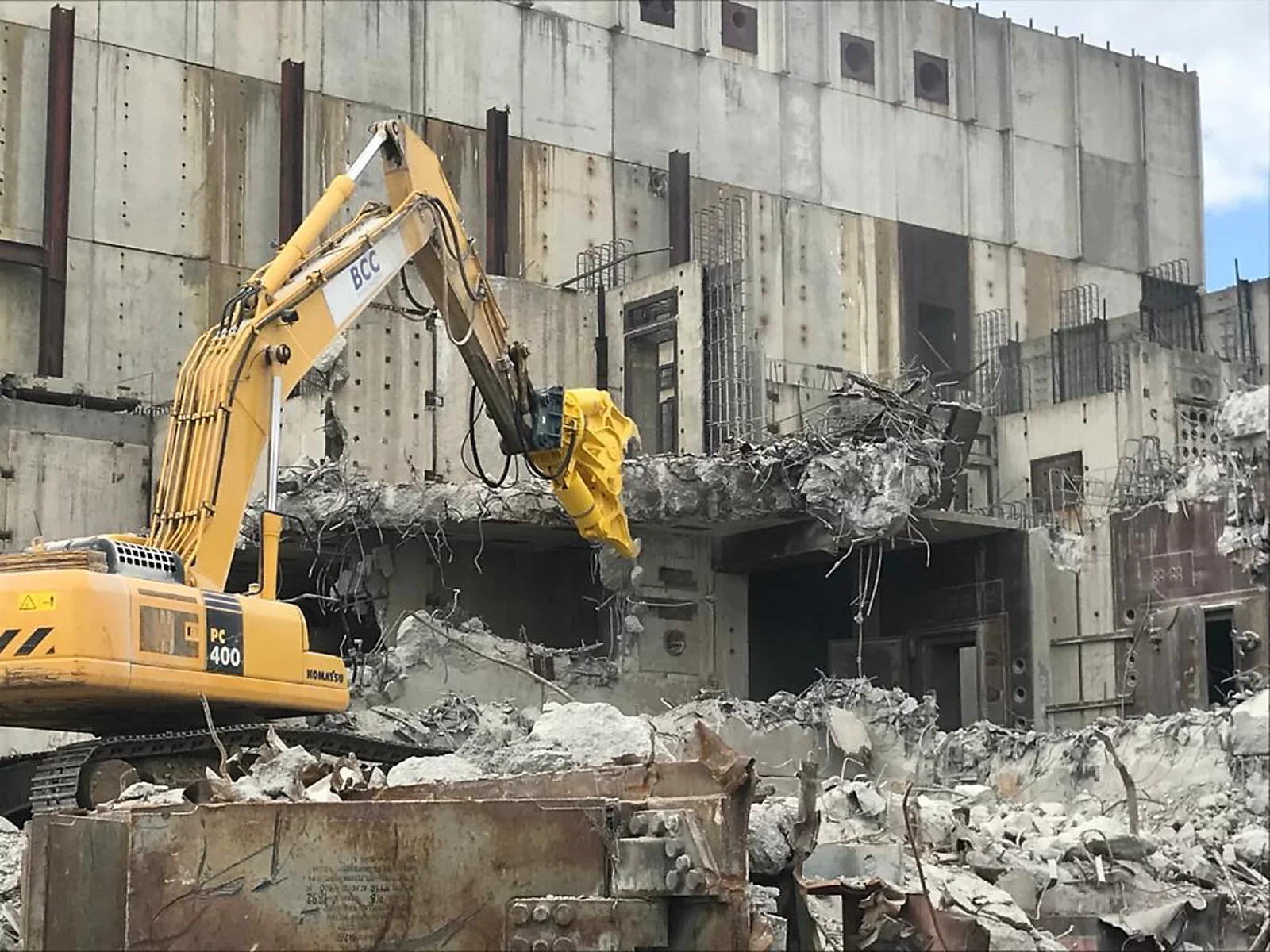
La demolición y la nueva construcción generan grandes cantidades de residuos, destruyen el carbono incorporado ya invertido en la estructura y requieren la producción de nuevo hormigón y acero. La rehabilitación, por otro lado, preserva lo que ya existe, reduciendo sustancialmente las emisiones de carbono.
Desde una perspectiva de costes, el refuerzo a menudo puede realizarse de forma más rápida y económica que la reconstrucción. Las cimentaciones existentes permanecen. Los pórticos estructurales permanecen. La perturbación es menor. En muchos casos, una rehabilitación bien diseñada logra no solo el cumplimiento de las normas modernas, sino incluso un rendimiento y una vida útil mejorados.
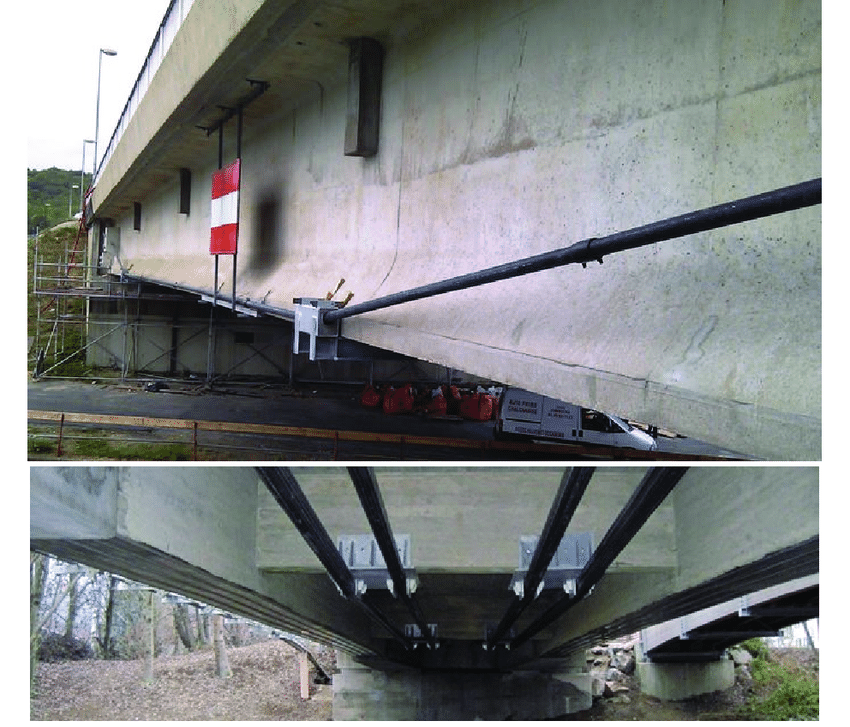
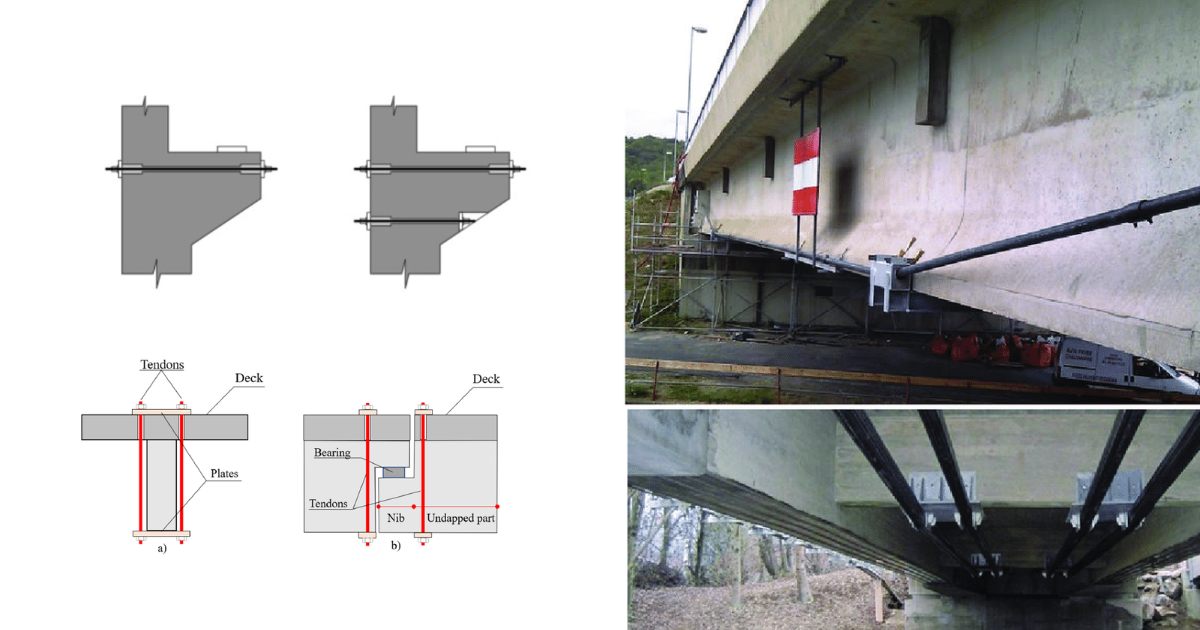
Refuerzo de puente – imagen de Bridge Engineering - Selected Issues, de Tomasz Siwowski
IDEA StatiCa Detail
En lugar de depender de hipótesis conservadoras o modelos excesivamente simplificados, el Método del Campo de Tensiones Compatible ayuda a los ingenieros a simular de forma realista cómo se redistribuyen las tensiones.
El Método del Campo de Tensiones Compatible (CSFM) es una extensión de los métodos de Biela-y-tirante (S&T) y Campos de Tensiones. Es un método no lineal moderno para el análisis de regiones D y elementos cuyo comportamiento puede simplificarse a tensión plana, es decir, un modelo 2D. Véase el siguiente artículo para comprender los fundamentos: CSFM explicado
Mediante el uso de IDEA StatiCa Detail, los ingenieros pueden modelar y analizar cualquier geometría, independientemente de su complejidad, y obtener resultados como campos de tensión y deformación, anchos de fisura y caminos de carga. Esta herramienta es compatible con las normas ACI y EN, lo que la hace versátil para diversos proyectos.
Los avances recientes en IDEA StatiCa Detail hacen que la rehabilitación sea mucho más precisa y efectiva. Dos características especialmente relevantes son:
1. Tendones no adherentes: A diferencia del postensado adherente tradicional, los tendones no adherentes no dependen de la adherencia con el hormigón a lo largo de su longitud.
- Esto es especialmente útil para reforzar regiones D: por ejemplo, tendones verticales en ménsulas cortas o extremos rebajados pueden cerrar fisuras, redistribuir tensiones y reforzar sin una adherencia invasiva.
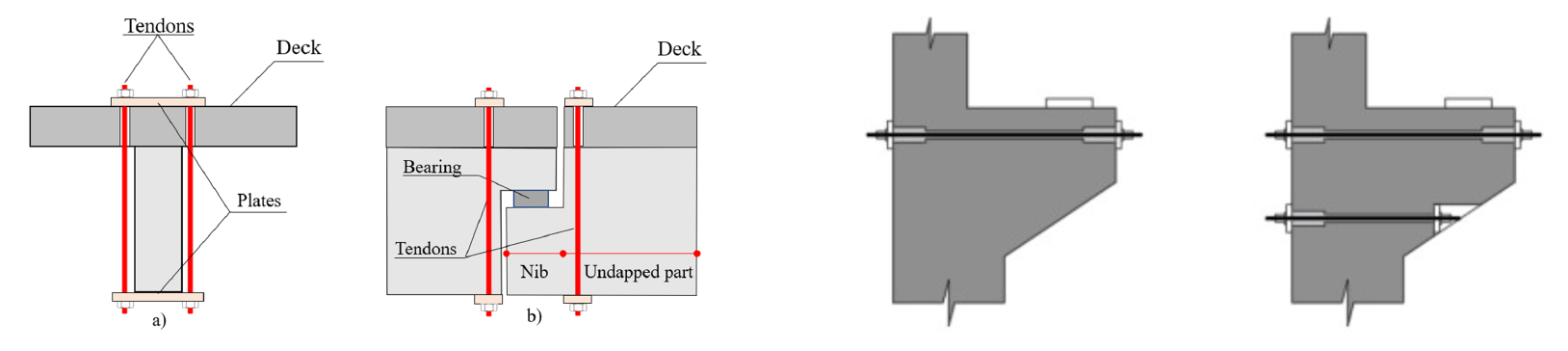
- Al rehabilitar hormigón muy antiguo (ya parcialmente fluido), el coeficiente de fluencia para el pretensado debe ajustarse a la baja para evitar sobreestimar los efectos. IDEA StatiCa permite ese matiz.

2. Barras de armadura lisas: IDEA StatiCa Detail también admite barras lisas (es decir, no corrugadas) en el diseño y análisis.
- Dichas barras pueden parecerse más a la armadura antigua o proporcionar detalles de anclaje más simples.
- La combinación de barras lisas con tendones no adherentes puede hacer que el refuerzo de vigas prefabricadas envejecidas, forjados nervados o regiones D sea más eficiente, preciso y económico.
3. Anclaje de estructura de acero en hormigón: Durante los proyectos de rehabilitación o refuerzo, es muy común combinar materiales anclando nuevas estructuras de acero en hormigón armado existente. Con IDEA StatiCa Detail (módulo 3D), estas uniones pueden modelarse utilizando un comportamiento de material realista, capturando la transferencia de carga no lineal entre el acero y el hormigón.
Respetando el pasado
La rehabilitación no es solo un problema de ingeniería, es un acto de custodia. Muchas de las estructuras de hormigón que existen hoy en día son más que simples bloques de construcción; llevan consigo un valor histórico, social y cultural. Al reforzarlas, preservamos su narrativa, extendemos su vida funcional y vinculamos la sostenibilidad al legado. En definitiva, la rehabilitación no consiste solo en reparar. Se trata de transformar lo que ya existe en algo que pueda seguir sirviendo a la sociedad durante las próximas décadas.
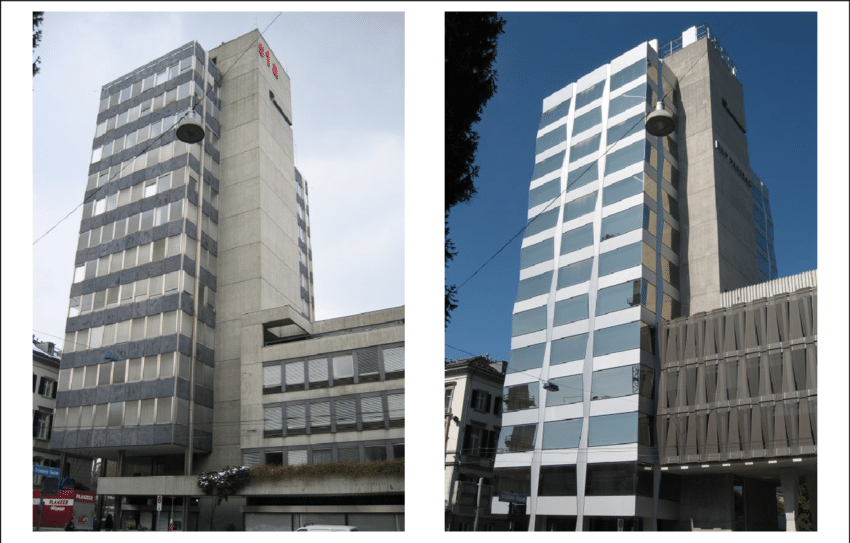
Ejemplo de evaluación y rehabilitación de un edificio existente - imagen de New European Technical Rules for the Assessment and Retrofitting of Existing Structures, de P. Luechinger, J. Fischer, Christis Z Chrysostomou, Peter Tanner
Muchos de vosotros conocéis todos los beneficios, y aun así preferís optar por la demolición y el diseño nuevo, y sabemos por qué. Esta tarea es muy difícil de abordar, ya sea por la escasa documentación, los métodos imprecisos o los efectos del tiempo sobre la estructura. El trabajo de ingeniería es a menudo único y requiere una comprensión profunda del problema con muy pocos ejemplos en los que apoyarse, y es ahí donde el CSFM, (disponible en IDEA StatiCa Detail) ayuda.
Conclusión
La rehabilitación y el refuerzo de estructuras de hormigón existentes no es simplemente una opción de segunda categoría, es una elección con visión de futuro. Con las herramientas y el análisis adecuados, los ingenieros pueden superar los desafíos técnicos que plantean la armadura antigua, las regiones fisuradas y el comportamiento incierto de los materiales. Mientras tanto, los demás se benefician de un menor impacto medioambiental y de la preservación del patrimonio. En cuanto al coste ahorrado… eso lo dejo a vuestra imaginación.
Pruebe hoy la última versión de IDEA StatiCa
Contenido relacionado
Pretensado en Detail – tendones no adherentes
Introducción y supuestos